
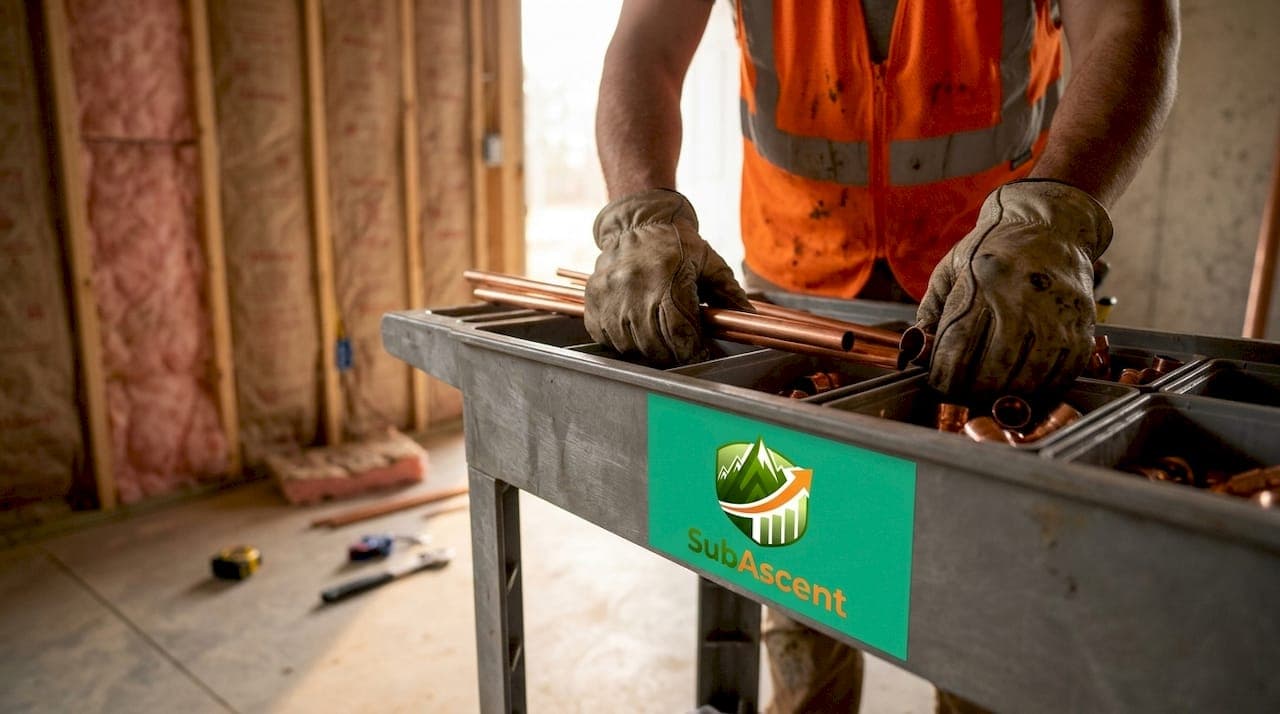
Every electrical foreman who has watched a journeyman spend 20 minutes hunting for conduit knows exactly what a missing trade helper costs. The role of a trade helper on jobsite is not grunt work. It is the operational backbone that keeps skilled tradespeople doing what they were hired to do. Yet most owner-operators and project managers at plumbing, HVAC, roofing, and drywall subs treat helper management as an afterthought, and they pay for that mistake in lost hours, safety incidents, and jobs that bleed money before anyone notices.
Table of Contents
- Understanding the core duties of trade helpers across the US, UK, and Australia
- Navigating safety and certification requirements for trade helpers
- How trade helpers enhance jobsite efficiency and reduce tradesperson downtime
- Comparing trade helper roles, teams, and working conditions in the US, UK, and Australia
- Best practices for managing trade helpers to boost performance and retention
- Reconsidering the role of trade helpers: the hidden leverage for jobsite success
- Streamline your trade helper management with Sub Ascent software
- Frequently asked questions
Key Takeaways
| Point | Details |
|---|---|
| Trade helper fundamentals | Trade helpers perform essential support tasks that keep construction sites running smoothly across regions. |
| Mandatory certifications | Compliance with certification and safety standards like CSCS, White Card, and OSHA is critical for site access and safety. |
| Productivity impact | Properly managed trade helpers reduce downtime and improve overall jobsite efficiency significantly. |
| Regional differences | Shift lengths, team sizes, and regulations for trade helpers vary between the US, UK, and Australia. |
| Management strategies | Mentorship, task rotation, and certification tracking help retain helpers and promote career progression. |
Understanding the core duties of trade helpers across the US, UK, and Australia
The word "helper" undersells what these workers actually do. A trade helper is a trained jobsite support role, not a warm body with a broom. Understanding the full scope of trade assistant responsibilities is the first step toward deploying them correctly.
In the United States, trade helpers carry and distribute materials, set up and clean work areas, hold materials in position for tradespeople, perform basic tasks like digging and mixing concrete, unload delivery trucks, and maintain tools. On a framing or concrete job, that list translates to dozens of individual actions per shift that directly determine whether your licensed tradespeople stay productive.
In the UK, the construction helper duties are governed by a formal credential system. UK laborers must hold a CSCS Green Labourer Card after completing a health and safety course, which qualifies them for site cleaning, material moving, assisting trades, and basic groundwork. The card is not optional. No card, no site access.
Australia has its own version of this requirement. Australian trade helpers need a White Card, which qualifies them for materials handling, site cleanup, traffic spotting, and earthworks, often across 10 to 12 hour shifts on civil and commercial sites. The White Card is the baseline, not the ceiling.
Here is a quick breakdown of core jobsite helper tasks that apply across all three regions:
- Material logistics: Receiving deliveries, sorting, staging, and distributing materials to the right crew at the right time
- Site preparation: Clearing debris, setting up scaffolding access, marking areas, and prepping surfaces before tradespeople arrive
- Tool management: Cleaning, organizing, and returning tools so nothing gets lost between shifts
- Direct trade support: Holding pipe, feeding wire, mixing mortar, or positioning panels while the licensed tradesperson focuses on the skilled work
- Site cleanup: Maintaining a clean, safe work environment throughout the shift, not just at the end of the day
- Logistics coordination: Communicating material needs between the field and the supply chain before shortages happen
For managing trade helpers efficiently, the key insight is that these tasks are interdependent. A helper who is good at material logistics but ignores site cleanup creates a safety problem. Training needs to cover the full picture.
Navigating safety and certification requirements for trade helpers
Certification is not paperwork. It is site access, legal compliance, and risk management rolled into one document. Get this wrong and your helper cannot step foot on the job. Get it very wrong and you are facing an OSHA citation or a WorkSafe investigation.
United States: US trade helpers must participate in daily safety briefings, wear personal protective equipment, report hazards, and keep the site clean per OSHA standards. There is no single national card like the UK or Australia, but OSHA 10 certification is widely expected on commercial sites, and many GCs require it before a helper can be badged in.
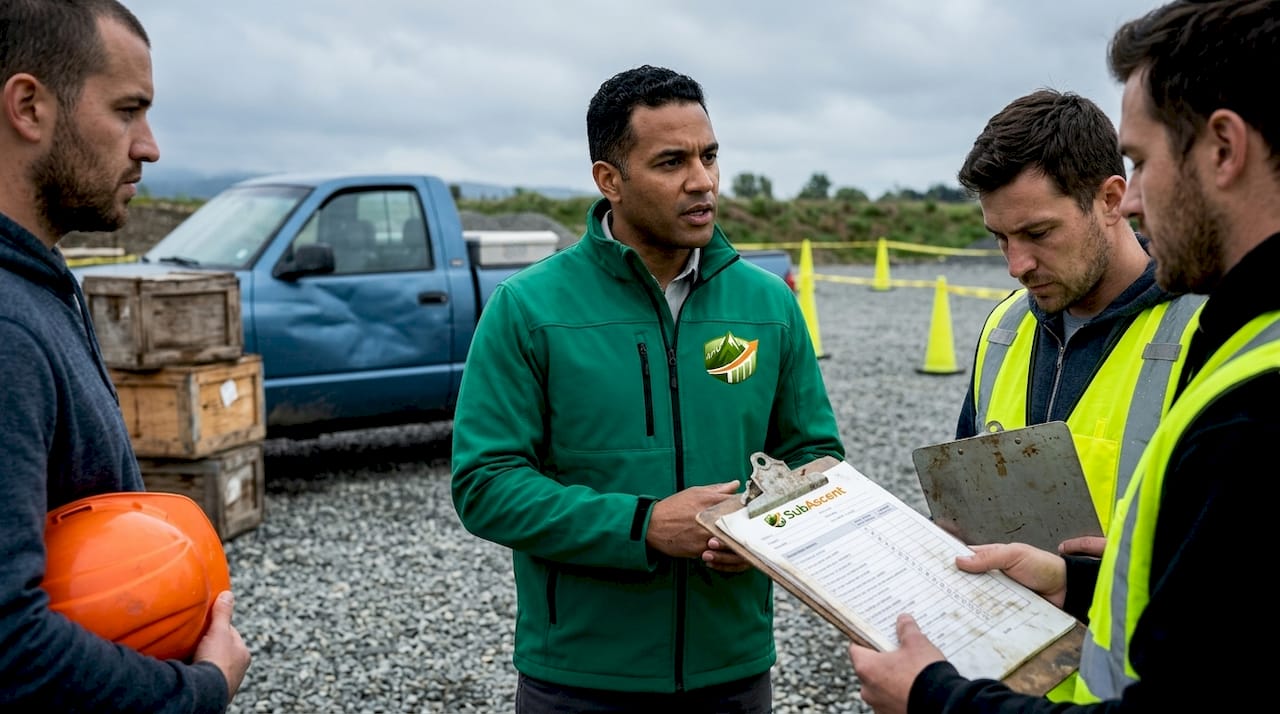
United Kingdom: UK laborers must hold a CSCS Green Labourer Card obtained after passing a CITB health and safety course, valid for three years, plus complete a site induction before starting work. The induction itself typically runs 30 to 60 minutes and covers emergency procedures, hazard zones, and site-specific rules.
Australia: Australian helpers must complete site inductions covering Job Safety Analyses and Safe Work Method Statements before starting any task. Traffic spotters need additional tickets beyond the White Card. The "clean as you go" rule is enforced, not suggested.
Here is what a solid safety compliance checklist looks like for helpers across all three regions:
- Verify certification before the first day, not on it
- Complete site-specific induction and document it
- Issue and inspect PPE at the start of every shift
- Include helpers in daily toolbox talks, not just licensed tradespeople
- Establish a clear hazard reporting process the helper can actually use
- Track certification expiry dates so renewals happen before access is lost
Pro Tip: In the UK, use the My CSCS app to verify a Green Card's validity on the spot. Takes 30 seconds and eliminates the "I left it at home" delay that holds up your whole morning.
For a structured approach to getting helpers compliant before day one, this site safety onboarding checklist covers the key steps worth adapting for your own process.
How trade helpers enhance jobsite efficiency and reduce tradesperson downtime
Here is the number that should get your attention: proactive helper assignment can prevent 20 to 30 percent productivity losses caused by material shortages on active sites. That is not a theoretical figure. That is what happens when a groundworker or laborer is not keeping materials flowing to the tradespeople who need them.
The productivity math is straightforward. A licensed electrician or plumber costs $65 to $95 per hour in fully loaded labor. Every minute that person spends walking to a material pile, cleaning up debris, or waiting for the right fitting is money you cannot bill back. A helper earning $22 to $28 per hour absorbs those tasks and keeps the licensed tradesperson on the work that justifies their rate.
In pipeline and welding contexts, trade helpers prepare materials and clean slag, enabling welders to stay focused on core tasks and reducing downtime across the shift. The same principle applies to every specialty trade. The masonry helper who pre-mixes mortar and stages block before the mason arrives is not doing unskilled work. They are doing time-sensitive, precision-dependent work that directly determines how many courses get laid that day.
Here is how to structure helper assignments to maximize their impact on your crew:
- Assign helpers before the shift starts. Brief them on the day's material needs, staging locations, and which tradespeople they are supporting. Improvising this in the morning costs 30 to 45 minutes.
- Match helper skills to trade requirements. A helper with experience on roofing jobs is not automatically the right fit for a fire protection crew. Specific knowledge of materials, tools, and trade sequences matters.
- Build a feedback loop. Ask your journeymen and foremen at the end of each day whether the helper kept them supplied and supported. This surfaces problems before they become patterns.
- Use helpers for end-of-day prep. Staging materials for the next morning's start is one of the highest-return tasks a helper can do. It costs nothing extra and eliminates the slow start that kills early productivity.
"No AI replaces the physical tasks of trade helpers. Investing in their training sustains efficiency because tools augment but do not replace human logistics on varied jobsites." — JobZone Risk
For operations looking at improving jobsite productivity across multiple active jobs, the leverage point is almost always helper deployment, not adding more licensed labor. You can also look at how mechanizing certain helper tasks with equipment like forklifts can extend what a small helper crew can accomplish on larger sites.
Comparing trade helper roles, teams, and working conditions in the US, UK, and Australia
If you are managing helpers across multiple regions or bidding work in a new market, the differences in how helpers operate are significant enough to affect your labor planning.
| Factor | United States | United Kingdom | Australia |
|---|---|---|---|
| Required certification | OSHA 10 (common), no national card | CSCS Green Labourer Card | White Card (mandatory) |
| Typical shift length | 8 to 10 hours | Standard hours, varies by site | 10 to 12 hours (civil sites) |
| Typical team size | 4 to 6 helpers per crew | Small teams under supervision | 5 to 10 on civil sites |
| Annual entry-level pay | $40,500 to $50,000 | Varies by region and trade | Award rates apply, varies by state |
| Tradespeople supported | 2 to 4 per helper | 1 to 3 per helper | 2 to 5 depending on site type |
| Site induction required | Yes, site-specific | Yes, 30 to 60 minutes | Yes, JSA/SWMS required |
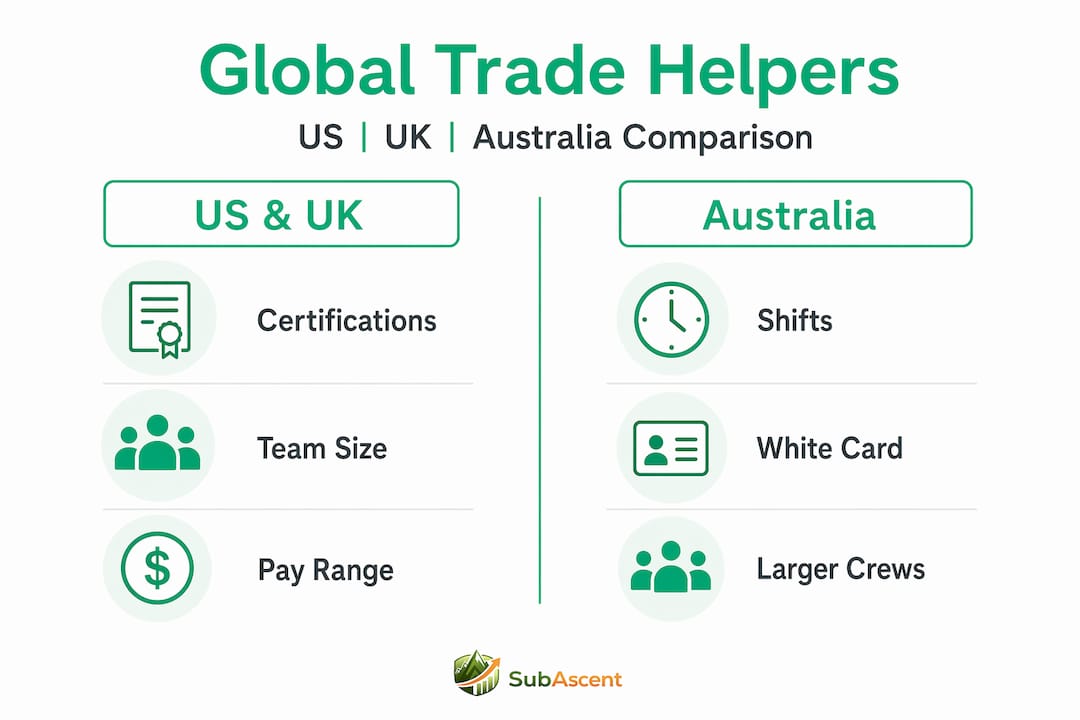
US trade helpers typically work in teams of 4 to 6 under journeyman supervision, earning $40,500 to $50,000 annually at entry level, with physical demands that include repeated lifting throughout the shift. That pay range matters when you are building labor budgets for electrical or HVAC bids.
UK sites require the CSCS Green Labourer Card plus a documented site induction before any laborer starts work. The induction is not just a formality. It is your legal record that the worker was briefed on site-specific hazards.
Australian helpers work longer shifts on civil and commercial sites, often in larger teams, with the White Card as the non-negotiable baseline for site access. For trade helper management solutions that span regions, tracking these credential differences in one place is the only way to avoid compliance gaps.
Best practices for managing trade helpers to boost performance and retention
Turnover among trade helpers is expensive and disruptive. A new helper takes two to three weeks to learn your site, your crew's preferences, and the material flow. Every time you replace one, you absorb that ramp-up cost again.
Pairing helpers with experienced mentors and rotating their tasks builds skills and reduces early turnover, with helpers on a realistic path to journeyman roles within one to two years in the US. That career trajectory is a retention tool. Use it explicitly. Tell helpers what they need to accomplish to move up, and they are far less likely to walk for an extra dollar an hour somewhere else.
Tracking site hours supports certification eligibility and pay raises across the US, UK, and Australia. In the UK, logged hours contribute toward NVQ qualifications. In Australia, they support Certificate III eligibility. Both can unlock 20 to 50 percent pay increases. Helpers who know their hours are being tracked and counted toward something are more engaged and more reliable.
Here is what a practical helper management approach looks like day to day:
- Assign a named mentor for every new helper during their first 30 days on site
- Rotate task assignments every two to four weeks to build a broader skill base and prevent burnout on repetitive tasks
- Include helpers in daily briefings alongside licensed tradespeople, not as an afterthought
- Document certification expiry dates in a shared system and set reminders 60 days out
- Recognize progress publicly when a helper earns a new certification or takes on additional responsibility
Pro Tip: Set a recurring calendar reminder 60 days before each helper's certification expiry. A lapsed CSCS card or White Card does not just inconvenience the helper. It pulls your whole crew off schedule when site access gets denied at the gate.
For managing trade helper teams across multiple jobs, the single biggest gap most specialty trade subs have is a centralized place to track who is certified, when those certifications expire, and which helpers are assigned to which jobs.
Reconsidering the role of trade helpers: the hidden leverage for jobsite success
Here is the uncomfortable truth most project managers at electrical, plumbing, and HVAC subs do not want to sit with: the helpers on your jobs are not a cost you manage. They are a multiplier you are either using well or wasting.
The conventional view treats helpers as interchangeable, low-skill labor. Hire whoever shows up, put them to work, replace them when they leave. That approach produces exactly the outcomes you would expect: high turnover, inconsistent site performance, safety incidents that were entirely preventable, and licensed tradespeople who spend a third of their day doing tasks a helper should be handling.
No AI replaces the physical tasks of trade helpers on varied jobsites. Carrying conduit through a tight mechanical room, staging roofing materials on a sloped deck, or mixing mortar to the right consistency for a masonry crew are tasks that require human judgment, physical presence, and site-specific knowledge. The tools get better every year. The need for a capable, trained helper does not go away.
The managers who get the most out of their helpers are the ones who treat the jobsite support role as a formal position with defined responsibilities, a career path, and a feedback mechanism. They are not doing anything exotic. They are just applying the same management discipline to helpers that they apply to their licensed tradespeople.
The importance of trade helpers shows up most clearly when they are absent. A framing crew without a helper moves slower. A roofing crew without a helper takes more safety risks because they are managing materials themselves. A concrete crew without a helper loses time on cleanup that compounds across the pour. The absence is the proof of value.
Invest in onboarding, track their hours, verify their certifications, and give them a reason to stay. The return is measurable in job profitability, not just morale.
Streamline your trade helper management with Sub Ascent software
Knowing what trade helpers should be doing and actually keeping track of it across five active jobs are two different problems. Certification expiry dates get missed. Hours go unlogged. New helpers start without a completed induction record. These are not failures of intent. They are failures of tooling.

Sub Ascent is built specifically for specialty trade subs, not general contractors with 200-person offices. It gives owner-operators and project managers at electrical, plumbing, HVAC, roofing, and drywall businesses a single place to track helper certifications, log site hours, manage crew assignments, and stay ahead of compliance gaps before they become site access problems. If your current system is a spreadsheet and a prayer, there is a better way to run your helper workforce.
Frequently asked questions
What certification do trade helpers need to work on UK construction sites?
Trade helpers in the UK must hold a valid CSCS Green Labourer Card, obtained by passing a CITB health and safety course, to legally access and work on construction sites. The card is valid for three years and must be renewed before expiry to maintain site access.
How do trade helpers improve productivity on jobsites?
They keep licensed tradespeople focused on skilled work by handling material logistics, site prep, and cleanup. Trade helpers reduce skilled tradesperson downtime by absorbing the support tasks that would otherwise pull a $75 per hour electrician away from billable work.
What safety responsibilities do trade helpers have on US jobsites?
OSHA standards require trade helpers to participate in daily safety briefings, wear PPE, report hazards, and maintain a clean, debris-free work area. Helpers are not exempt from safety compliance because they are entry-level.
How can project managers reduce turnover among trade helpers?
Pair new helpers with a named mentor, rotate their task assignments to build skills, and log their site hours toward certification eligibility. Mentorship and task rotation reduce early turnover and give helpers a concrete reason to stay beyond the next paycheck.
Are there differences in trade helper shift lengths across the US, UK, and Australia?
Yes. US helpers typically work 8 to 10 hour shifts, UK shifts follow standard site hours that vary by project, and Australian helpers often work 10 to 12 hour shifts on civil and commercial sites. Plan your labor budgets accordingly when bidding work in each market.