
Scaffolding costs in masonry bids follow a straightforward core formula: Total cost = (area in square feet × rental rate) + labor costs + delivery and mobilization fees. That formula is the starting point, not the finish line. What separates a tight bid from a money-losing one is how well you account for everything that sits underneath it.
Here is what that formula actually contains:
- Material rental: Priced per week or per month depending on project duration. Longer jobs mean extended rental periods, and extension fees can stack fast if you do not lock in terms upfront.
- Labor for erection and dismantling: Labor pricing factors include scope complexity, local market rates, OSHA requirements, and total time on site. Masonry projects typically require multiple setup and teardown cycles as work progresses up the structure.
- Delivery and mobilization: Crane time, truck hauls, and staging area logistics all carry a price. These fees vary by site location and access conditions.
- Setup and teardown (striking) labor: This is a separate line item from erection. Masonry scaffolding often needs height adjustments mid-project, which means dismantling and re-setup labor must be accounted for in every bid.
Get these components right and you have a defensible number. Miss one and you are absorbing the difference out of margin.
Table of Contents
- How scaffolding costs work in masonry bids: the hidden variables
- Why OSHA regulations drive scaffolding costs higher on masonry projects
- How to estimate scaffolding costs accurately for masonry bids
- Subascent helps masonry subcontractors bid and track scaffolding costs
- Key Takeaways
How scaffolding costs work in masonry bids: the hidden variables
The formula is clean. The job site is not. Several cost drivers routinely get left out of masonry bids, and they are the ones that cause change orders.
The core cost components:
- Material rental (tubes, couplers, decking, base plates, bracing)
- Erection and dismantling labor
- Delivery, transport, and mobilization
- Permit and licensing fees
- Site-specific adjustments and re-configurations
Where bids go wrong:
Scaffolding cost drivers include height, complexity, number of elevations, and project duration. A four-story masonry facade on a tight urban lot costs significantly more to scaffold than the same square footage on a single-story building with open site access. Every additional elevation adds material, labor, and coordination time.
Site access is the most underestimated variable. When crews cannot drive materials directly to the base of the structure, manual transport time increases. That premium can add 30–50% to scaffolding labor costs on constrained sites. Permit fees compound this further. Costs vary by municipality, and in some jurisdictions they are substantial enough to move the needle on a competitive bid.
Masonry scaffolding also carries higher load-bearing requirements than general-purpose access scaffolding. Brick, block, and stone are heavy. The scaffold system must be specified to handle those loads safely, which means heavier bracing, stronger decking, and more robust tie-in points. Underspecifying to save money on rental is a liability, not a savings.
Regional labor markets add another layer. Scaffold erector wages in New York or San Francisco are materially different from those in the Southeast or Midwest. If you are bidding across multiple markets, your labor assumptions need to reflect local rates, not a national average.
Pro Tip: Before you finalize any scaffolding line item, call the local building department and your scaffold supplier on the same day. Permit timelines and fee schedules change, and a supplier who knows the site can flag access issues before they become change orders.
Why OSHA regulations drive scaffolding costs higher on masonry projects
OSHA's scaffolding standards under 29 CFR 1926 Subpart Q are not optional line items. They are cost drivers baked into every compliant masonry bid.
Masonry work demands more from a scaffold system than most other trades. The loads are heavier, the working platforms need to be wider, and the frequency of inspection is higher. OSHA compliance requires heavier-duty bracing, stronger decking, and certified installation, all of which increase cost multipliers compared to standard access scaffolding.
The compliance-related costs estimators must include:
- Certified installation labor: OSHA requires scaffolding to be erected and dismantled under the supervision of a competent person. That credential carries a wage premium.
- Frequent inspections: Scaffolding must be inspected before each work shift and after any event that could affect structural integrity. Each inspection is time, and time is money.
- Load testing and documentation: Masonry scaffolding must be rated for the actual loads it will carry. Documenting this for OSHA compliance adds administrative overhead.
- Fall protection systems: Guardrails, personal fall arrest systems, and toeboards are required at specific heights. These components add material cost.
- Safety netting and debris containment: On occupied or public-adjacent sites, additional protective measures are often required by both OSHA and local ordinance.
The scarcity of qualified scaffold erectors continues to push labor costs higher, particularly in states with stricter safety training requirements. Ignoring or underestimating these compliance costs does not make them go away. It just means you absorb them after the bid is awarded.
How to estimate scaffolding costs accurately for masonry bids
Accurate scaffolding estimation starts before you open a spreadsheet. It starts on the job site, or at minimum, with a thorough review of the drawings and specifications.
Site assessment first. Walk the site or study the plans for access constraints, ground conditions, and the number of elevations requiring scaffold. Identify whether the structure has unusual features like setbacks, canopies, or irregular facades that will require custom configurations. This is also when you confirm whether the GC's scope includes any scaffold or whether it falls entirely on your bid.
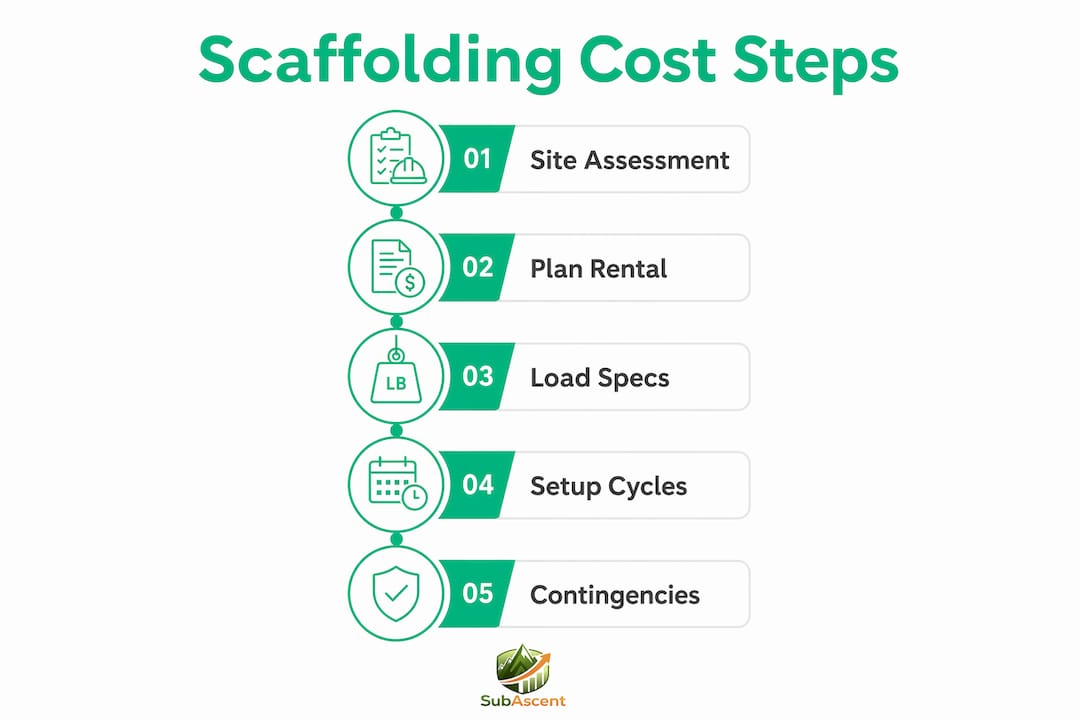
Nail down rental period assumptions. Masonry projects run long, and scaffold rental periods are easy to underestimate. Confirm the supplier's standard hire period, the cost of extensions, and the notice required to avoid additional charges. A supplier who quotes a low weekly rate but charges aggressively for overruns can cost you more than a higher upfront quote.
Specify the right system for masonry loads. Work with your scaffold supplier to confirm the system is rated for the actual loads your crew will impose. Brick and block pallets, mortar, and tools add up fast. Underspecifying creates a safety risk and a compliance exposure. For heavy masonry work, heavy-duty cuplock or frame systems with appropriate safe working load ratings are typically required.
Budget for multiple setup and dismantle cycles. Masonry projects often require scaffold height adjustments as work progresses. Each adjustment means partial dismantling and re-erection. These cycles need to be priced as separate labor events, not folded into a single erection cost. Missing this is one of the most common ways masonry estimators lose margin on scaffold-heavy jobs.
Build in buffer allowances. Include contingency for permit fees, inspection delays, and weather-related extensions. A buffer on the total scaffolding line item is a reasonable starting point for most projects, though complex urban sites may warrant more.
Pro Tip: Use digital estimating tools to track scaffolding costs as a distinct cost code within your bid. When you can compare estimated versus actual scaffold costs across jobs, you build a data set that makes every future bid more accurate. The masonry bid leveling process becomes sharper when you have real historical numbers behind it.
Accurate scaffolding cost estimation is not just about protecting margin on one job. It is about building a masonry bidding process that wins work at a price you can actually deliver.
Subascent helps masonry subcontractors bid and track scaffolding costs

Masonry estimators and project managers who use Subascent stop rebuilding the same bid workbook every time a scaffold-heavy job comes through. The platform is built specifically for specialty trade subcontractors, which means the workflows fit how masonry businesses actually operate, not how a general contractor thinks they should.
Scaffolding costs sit inside a bid as a distinct, trackable line item. Labor for erection, dismantling, re-setup cycles, permit fees, and delivery charges all get logged against the job, so you can see budget versus actual before the job closes. Permit fees and inspection costs that often get buried are visible from the start.
What masonry subcontractors gain with Subascent:
- Bid templates that include scaffolding as a dedicated cost code
- Expense logging that captures labor, rental, and mobilization separately
- Budget-versus-actual tracking throughout the project lifecycle
- Bid leveling tools to compare scaffold scope across GC invitations
- A workflow that prevents missed cost factors from eroding margin
Start managing your masonry bids with the precision your jobs require.
Key Takeaways
Scaffolding costs in masonry bids are defined by rental, labor, delivery, and compliance costs, and missing any one component puts margin at risk.
| Point | Details |
|---|---|
| Core formula | Total cost equals area times rental rate, plus labor, plus delivery and mobilization fees. |
| Site access premium | Constrained sites can add 30–50% to scaffolding labor costs due to manual transport requirements. |
| OSHA compliance costs | Certified installation, frequent inspections, load documentation, and fall protection all add to the bid total. |
| Multiple dismantle cycles | Masonry projects often require scaffold height adjustments mid-job; each cycle must be priced as a separate labor event. |
| Subascent for masonry bids | Subascent tracks scaffolding as a distinct cost code, giving estimators budget-versus-actual visibility before jobs close. |