

Masonry delivery documentation is the process of verifying, recording, and communicating every material shipment against a purchase order before work continues. How foremen document material deliveries in masonry determines whether job costs stay accurate, disputes get resolved fast, and invoices clear without rework. The core method is a three-step sequence: verify quantities and condition on arrival, annotate the delivery ticket with job number and cost code immediately, and upload a photo or scan the same day. Get that sequence right and your audit trail builds itself. Miss any step and you are chasing paper for weeks.
How foremen document material deliveries in masonry: the core process
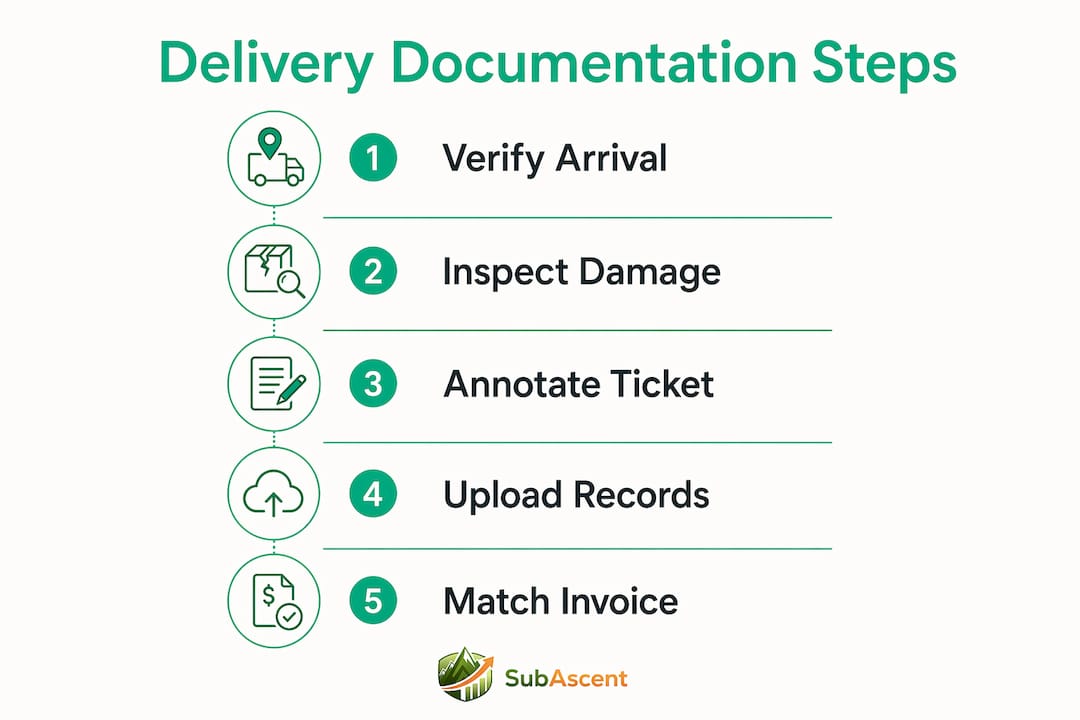
The foundation of masonry delivery documentation is real-time verification against the purchase order. Digital verification takes less than 2 minutes per delivery and prevents the delays that paper processes create. Two minutes is a small investment compared to the hours spent reconciling a disputed invoice three weeks later.
Three-way matching ties the whole system together. Accurate delivery records enable matching the purchase order, delivery confirmation, and invoice to speed approval and prevent overpayment. Without a reliable delivery record, invoice matching breaks down and disputes multiply.
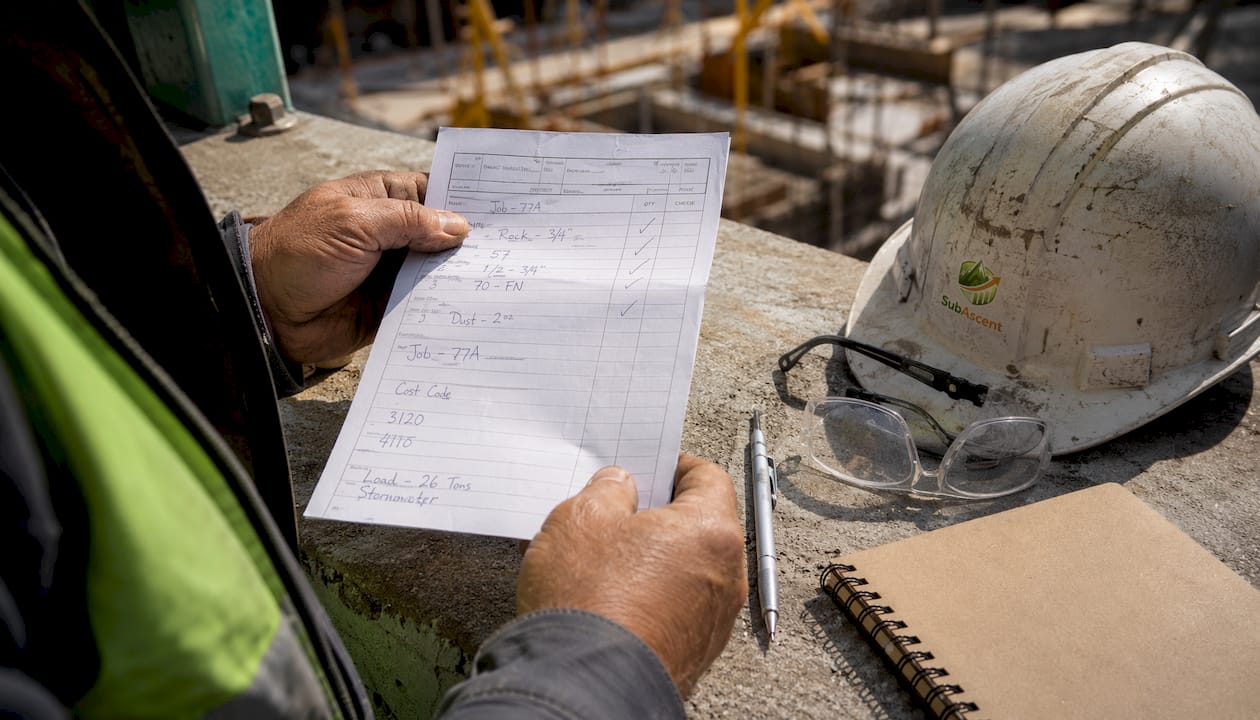
The standard industry term for this workflow is "delivery receipt management," though most foremen simply call it ticket control. Both terms describe the same practice: capturing what arrived, confirming it matches what was ordered, and getting that information to the office the same day.
What are the best practices for verifying masonry deliveries on site?
Verification starts before the driver leaves. A foreman who signs the ticket without counting pallets or checking for cracked block has no leverage in a dispute later. The following steps form the field standard for masonry shipment recording:
- Count against the PO. Pull up the purchase order on your phone or tablet before signing. Confirm unit counts, product codes, and sizes match what was ordered.
- Inspect for damage. Check brick, block, and stone for cracks, chips, and moisture damage. Reference ASTM C90 for concrete masonry units or ASTM C216 for face brick when a supplier disputes a rejection.
- Photograph everything. Capture timestamped photos of the full load, any damage, and the delivery ticket itself. Photos taken before the truck moves are the only evidence that holds up in a dispute.
- Record partial deliveries immediately. If only 60% of a block order arrives, note the shortage on the ticket and flag it in your app before signing. A partial delivery signed without notation becomes a full delivery in the accounting system.
- Use your mobile device as the primary tool. Foremen who use mobile devices as their primary documentation tool achieve better accuracy and speed, but only when the process is simple enough to follow consistently under pressure.
Pro Tip: Keep a printed or saved copy of each open PO on your phone. When a truck arrives, you have the order in hand before the driver hands you a ticket.
Damage inspections carry more weight when you cite a standard. Telling a supplier "this block fails ASTM C90 absorption requirements" is harder to dismiss than "it looks wet." Masonry subcontract scope reviews often specify which ASTM standards apply, so check your scope documentation before the first delivery arrives.
How should foremen handle delivery tickets to ensure accurate job cost tracking?
The delivery ticket is the source document for job costing. Every error that reaches accounting started with an unmarked or misread ticket. The right workflow eliminates most of those errors before the ticket leaves the site.
- Write the job number on the ticket before you sign it. Do this while the driver waits. A ticket that leaves the site without a job number will be coded to the wrong job or held in accounting limbo.
- Add the cost code or phase code. Annotating tickets with job and cost codes on-site eliminates 80–90% of accounting confusion and invoice mismatches. That number reflects how much of the problem is created in the field, not the office.
- Photograph or scan the ticket the same day. Upload it to your job management system before you leave the site. A ticket sitting in a truck cab overnight is a ticket that may never reach accounting.
- Use a cost code cheat sheet. Post a laminated card in the site trailer or save a PDF on your phone listing every active cost code for the job. Foremen who guess at codes create rework for the entire accounting team.
- Communicate discrepancies to accounting within 24 hours. Do not wait for the invoice to arrive. If a delivery was short or damaged, accounting needs to know before they process payment.
Pro Tip: Field-office friction is the main killer of job profitability. A cost code cheat sheet and same-day uploads cut that friction faster than any software change.
Avoid the common mistake of resolving discrepancies only after the invoice arrives. By that point, materials may have been installed, moved, or mixed with other stock. The dispute becomes nearly impossible to prove.
What role does planning play in masonry delivery documentation?
Planning is what makes documentation manageable. A foreman who receives three surprise deliveries on the same morning will cut corners on every ticket. Coordinated delivery scheduling removes that pressure.
The field standard is a 6–8 week lookahead plan aligned with project milestones. Just-in-time delivery strategies minimize on-site stock and reduce the risk of material damage or double handling. Less material sitting on site means fewer opportunities for loss, theft, or weather damage.
Staging location matters as much as timing. Delivery locations that align with two-week lookahead staging plans avoid double handling, which can add 20–30% to labor cost. Moving a pallet of brick twice because it was dropped in the wrong spot is a direct hit to your labor budget.
Key planning practices for masonry foremen include:
- Confirm delivery windows with suppliers at least 48 hours in advance.
- Align delivery dates with the installation schedule so materials arrive when the crew is ready to use them.
- Designate specific staging areas for each material type before the first truck arrives.
- Build contingency plans for supplier delays, including backup sources for critical materials.
- Review the two-week lookahead every Monday morning and adjust delivery schedules accordingly.
Good planning also reduces the documentation burden. When deliveries arrive on schedule and in the right location, verification is straightforward. Unplanned deliveries create chaos that leads to missed tickets and uncoded costs.
Which digital tools improve foreman delivery tracking efficiency?
Mobile apps purpose-built for field documentation outperform paper systems on every measurable dimension. The key is choosing a workflow that captures all delivery data in a single step. Capture-once strategies reduce paperwork and increase compliance in busy field conditions. When a foreman has to open three different apps to log one delivery, compliance drops fast.
The most effective mobile workflows share four characteristics:
- PO linkage. The app connects each delivery confirmation directly to the open purchase order, so quantity variances are flagged automatically.
- Photo capture built into the confirmation step. The foreman takes photos as part of signing off, not as a separate task.
- Cost code entry at the point of receipt. The app prompts for job number and cost code before the confirmation is submitted.
- Immediate upload to the office system. The delivery record reaches accounting in real time, not at end of day.
Pro Tip: Before rolling out any mobile tool to your crew, run one full delivery cycle as a test. If it takes more than 3 minutes from truck arrival to submitted record, the workflow needs simplification.
Training is the factor most foremen underestimate. A well-designed app used inconsistently produces worse data than a simple paper form used correctly every time. Standardize the process first, then add technology. Subascent's CrewTrack content covers how foremen can build consistent daily field reporting habits that extend naturally to delivery documentation.
How should foremen address discrepancies in masonry material deliveries?
Discrepancy handling is where documentation either protects the project budget or fails it. The window for action is short. Flagging discrepancies within 24 hours with photo proof is the standard; delayed documentation causes most credit claims to be rejected. Suppliers and insurers both use the same defense: materials were moved or used before the damage was reported.
The correct protocol is a five-step sequence:
- Document the discrepancy on the delivery ticket before the driver leaves. Note the shortage or damage in writing and have the driver sign or initial it.
- Photograph the issue immediately. Capture the damaged units, the ticket, and the truck if it is still on site. Timestamps are your evidence.
- Notify your project manager or procurement contact within 24 hours. Send the photos and a written summary. Do not rely on a verbal conversation.
- Track the credit request in writing. Log the supplier's response, the expected credit amount, and the resolution date. Follow up if you do not receive confirmation within five business days.
- Keep the damaged materials segregated until the credit is confirmed. Do not let damaged block or brick get mixed into the general stock. Once it is mixed, the dispute is over.
Common documentation mistakes that foremen make include signing tickets without noting damage, failing to photograph before the truck leaves, and waiting for the invoice before reporting a shortage. Each mistake transfers the financial risk from the supplier to your company.
Key Takeaways
Masonry foremen who verify deliveries in real time, annotate tickets with job and cost codes on-site, and upload records the same day eliminate the majority of job cost errors before they reach accounting.
| Point | Details |
|---|---|
| Verify against the PO on arrival | Check quantities and condition before signing; flag shortages on the ticket while the driver is present. |
| Annotate tickets immediately | Writing job number and cost codes on-site eliminates 80–90% of accounting confusion and invoice mismatches. |
| Upload same day | Photos and scanned tickets submitted before leaving the site prevent data loss and speed invoice approval. |
| Plan deliveries 6–8 weeks out | Aligning deliveries with installation schedules reduces double handling and cuts unnecessary labor cost. |
| Report discrepancies within 24 hours | Delayed reporting causes most credit claims to be rejected; photo evidence taken before the truck leaves is essential. |
What I've learned from watching foremen lose money on deliveries
The most expensive mistake I see masonry foremen make is not a bad delivery. It is a good delivery that never got documented properly. A full load of brick arrives, the foreman is busy directing the crew, and the ticket gets signed and stuffed in a pocket. By Friday it is in a pile. By the following Wednesday it is lost. The supplier invoices for the full amount, accounting pays it, and nobody knows a pallet was short until the job closes and the numbers do not add up.
The fix is not complicated. It is a habit. Write the job number before you sign. Take a photo before the truck moves. Upload before you leave the site. Those three actions take less than five minutes and they protect every dollar in that delivery.
The second thing I have seen kill job profitability is double handling. Foremen accept deliveries in whatever location is convenient at the time, and then the crew spends half a day moving material to where it actually needs to be. That labor never shows up on a change order. It just disappears into the job cost. Staging plans and confirmed delivery locations are not administrative overhead. They are direct labor savings.
Digital tools help, but only if the process is simple. I have watched crews abandon perfectly good apps because the workflow had too many steps. If your foremen have to tap through five screens to log a delivery, they will stop doing it. The best systems I have seen require one photo, one cost code entry, and one submit button. That is it.
— Dave
How Subascent helps masonry foremen track deliveries accurately
Masonry foremen need field tools that connect delivery confirmation directly to job costs without adding paperwork. Subascent builds software for specialty trade subs, including masonry teams, that puts purchase order verification, photo capture, and cost code entry in one mobile workflow.

The CrewTrack field tools from Subascent let foremen log deliveries, attach photos, and assign cost codes from the job site in real time. Records reach the office immediately, so accounting can match invoices without chasing tickets. For masonry subs managing multiple active jobs, that connection between field data and job cost tracking removes the friction that slows payment and distorts budgets. See how Subascent fits your masonry operation at subascent.com.
FAQ
What should a foreman write on a delivery ticket?
Write the job number, cost code or phase code, date, and any shortage or damage notes before signing. Annotating tickets on-site eliminates the majority of accounting confusion and invoice mismatches.
How quickly should a foreman report a damaged delivery?
Report damaged or incorrect deliveries within 24 hours with timestamped photos. Delayed reporting causes most supplier credit claims to be denied because materials may have been moved or used.
What is three-way matching in masonry delivery documentation?
Three-way matching compares the purchase order, the delivery confirmation, and the supplier invoice to verify that all three agree before payment is approved. It is the standard method for preventing overpayment on masonry material orders.
How far ahead should foremen plan masonry deliveries?
A 6–8 week lookahead aligned with project milestones is the field standard. Just-in-time delivery planning minimizes on-site stock and reduces damage and double-handling costs.
What is the biggest compliance risk in delivery documentation?
Signing a delivery ticket without noting damage or shortages is the most common compliance risk. Once a ticket is signed without notation, the foreman has legally accepted the delivery as complete, making credit claims very difficult to pursue.