
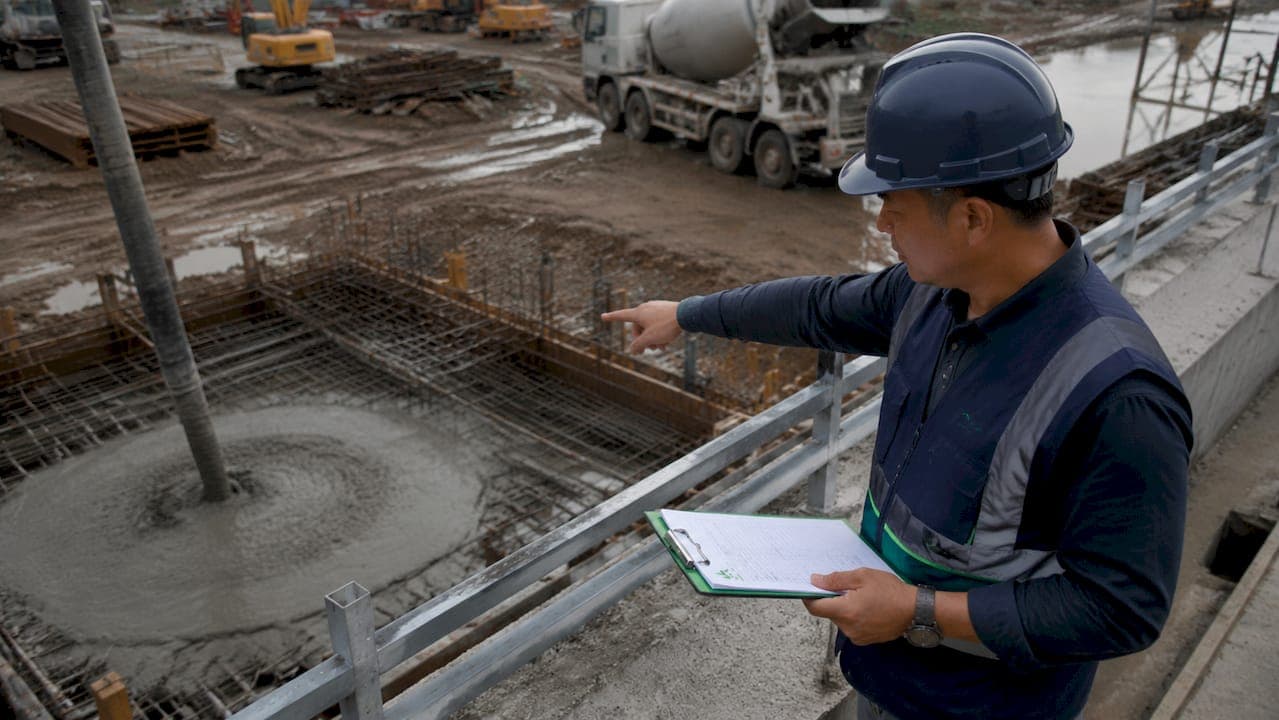
The foreman's role in grouting inspections is defined as the direct supervision of grout mixing, placement, testing, and documentation to meet engineering specifications, safety codes, and inspection authority requirements. You are the link between the structural engineer's drawings and what actually happens on the slab or wall. Without a foreman actively managing grouting inspection responsibilities, quality failures go undetected until they become structural problems or mandatory rework. This guide covers what you need to know about your duties, the 2026 code requirements that govern them, and the field practices that keep inspections moving without delays.
What are the primary duties of a foreman during grouting inspections?
The foreman's grouting inspection responsibilities fall into four non-negotiable categories: preparation, monitoring, documentation, and communication. Each one directly affects whether the pour passes or gets flagged.
Preparation before the pour
Your job starts before the first bag of grout opens. Pre-inspection readiness checks including vent location, duct cleanliness, and substrate surface condition are the most frequent cause of inspection hold-ups when skipped. Confirm that vents are placed correctly, ducts and tendons are clean, and substrate surfaces are dry and within temperature limits before grout pours begin. Check form tightness and verify bearing pad installation if you are working on precast elements. A five-minute walkthrough before the inspector arrives prevents a two-hour delay after.

Monitoring grout mixing and testing
Grout batching and testing are strict non-negotiables. For post-tensioned concrete work, grout bleed must be ≤0.5% and flow time must fall within 11–30 seconds to pass inspection standards. Lapses in these parameters can invalidate an entire pour even when placement looks perfect. You need to be present during batching, watch the water-to-grout ratio, and confirm test results before placement begins. Do not let the crew skip the flow cone test because they are running behind.
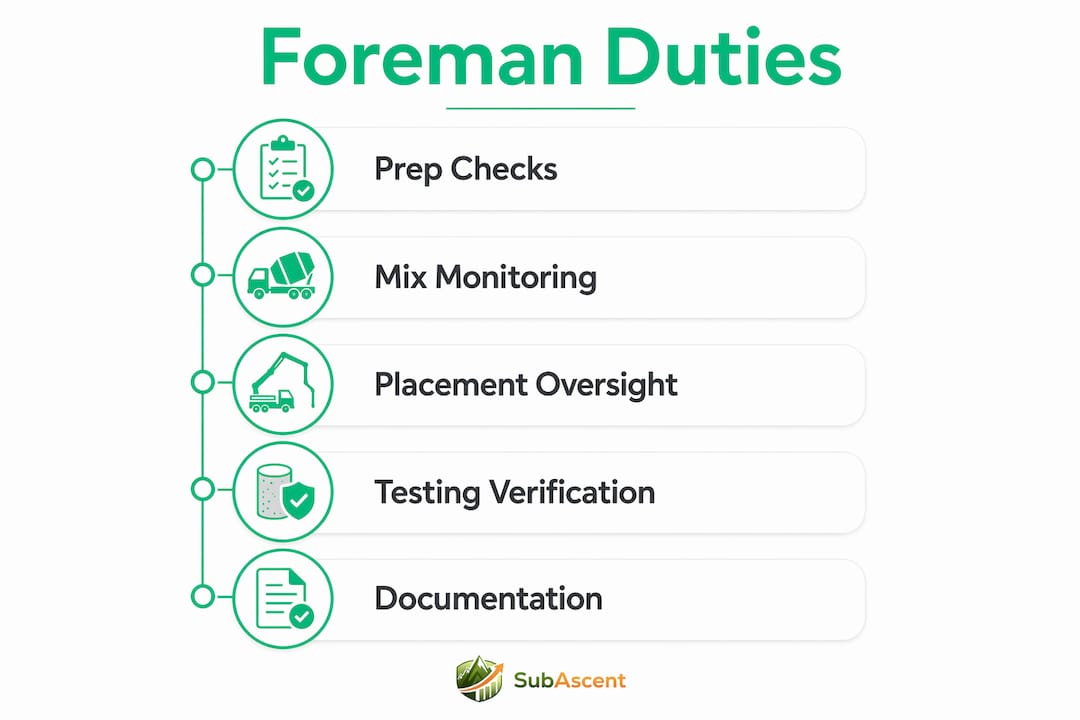
Documentation and communication
Detailed daily field reports that include weather, crew size, grouting specifics, and quality measures are what enable timely release of work and keep project schedules intact. Your report is the paper trail that protects you, the sub, and the GC if questions arise later. Log batch sheet numbers, test results, inspector names, and any deviations from the spec. Keep communication with the Special Inspector direct and factual. If something does not meet spec, document it and report it rather than hoping it passes.
Pro Tip: Set up a simple daily report template on your phone or tablet before the job starts. Fill it in during the pour, not at the end of the day when details blur.
- Verify vent placement and duct cleanliness before the inspector arrives
- Confirm substrate surface is dry and within temperature spec
- Witness grout batching and record flow time and bleed results
- Log all batch sheet numbers and test outcomes in your daily report
- Communicate any deviations to the Special Inspector immediately
How do 2026 industry standards shape the foreman's inspection responsibilities?
The 2026 code environment puts specific legal obligations on the foreman that go beyond general supervision. Understanding these requirements is not optional. They define what you must do and when.
IBC Table 1705.4 and seismic zone requirements
Structural masonry in seismic design categories D, E, and F requires continuous grout placement inspection by a licensed Special Inspector for the full duration of the pour per IBC Table 1705.4 and ASCE 7 seismic hazard maps. Continuous means the inspector must be physically present the entire time grout is being placed. Your role is to coordinate with the Special Inspector before the pour starts, confirm they are on-site, and hold the crew until they arrive. Starting without the inspector in a seismic D, E, or F zone is a code violation.
Post-tensioned slab grouting requirements
Grout injection inspections in post-tensioned slabs must verify pressure between 0.5–1.0 MPa, confirm air-free vent returns, and document volumes and pressures for final reports. The typical elongation tolerance is ±7%, and grout bleed must stay at or below 0.5% per EN 445 standards. These are not suggestions. If the inspector records a bleed result above 0.5%, the pour fails regardless of how clean the placement looked.
Hold points and sign-off protocols
Specialized grouting inspections operate under mandatory HOLD points where no work may proceed without written inspector sign-off. HOLD means stop completely. Skipping a hold point or trying to work around it can result in mandatory demolition ordered by the structural engineer of record. The cost of that outcome far exceeds the cost of waiting 30 minutes for a signature.
Pro Tip: Print or screenshot the Inspection and Test Plan (ITP) for your specific scope and mark every HOLD point before the job starts. Walk the crew through it on day one.
| Code or Standard | Requirement | Foreman Action |
|---|---|---|
| IBC Table 1705.4 | Continuous inspection in seismic categories D, E, F | Confirm Special Inspector is on-site before pour starts |
| EN 445 | Grout bleed ≤0.5%, flow 11–30 seconds | Witness batching and record test results |
| ITP HOLD points | No work without written sign-off | Stop crew and wait for inspector signature |
| ASCE 7 | Seismic hazard classification drives inspection level | Know your project's seismic design category |
What best practices can foremen adopt for effective grouting inspections?
The difference between a smooth inspection and a costly delay usually comes down to preparation and attitude. These are the practices that experienced masonry and concrete foremen use to keep grouting inspections on track.
-
Complete your pre-pour checklist before the inspector arrives. Walk the area, check vents, confirm substrate conditions, and verify batch materials are on hand. Inspectors notice when a foreman is prepared. It builds credibility and speeds up approvals.
-
Treat the Special Inspector as a partner, not an obstacle. Viewing Special Inspectors as partners helps foremen get faster approvals. Introduce yourself, share your daily report template, and ask if they have any concerns before work starts. A cooperative relationship moves the job forward.
-
Train your crew on quality standards before the pour, not during it. Your crew needs to understand why grout bleed limits and flow time windows matter. When they understand the consequence of a failed test, they take batching seriously. Inspections are not a surprise audit. They are a confirmation of work your crew already did correctly.
-
Document everything in real time. Batch sheet numbers, test results, inspector names, weather conditions, and crew size all go into your daily report during the pour. Waiting until the end of the day means missing details that matter for compliance and closeout. Subascent's daily report tools are built for exactly this kind of field documentation.
-
Never skip a hold point under schedule pressure. Bypassing inspection steps can lead to mandatory demolition or redo ordered by the structural engineer of record. No schedule pressure justifies that outcome. If the GC is pushing you to move without sign-off, put the request in writing and escalate it.
Pro Tip: If you are working on a masonry subcontract scope that includes grouting in seismic zones, confirm the inspection category in the contract before mobilizing. Discovering you need continuous inspection on day one of the pour creates immediate problems.
What practical challenges do foremen face during grouting inspections?
Real grouting inspections do not always go by the book. Schedule pressure, crew variability, and environmental conditions create friction that you need to manage without cutting corners.
-
Schedule pressure from the GC. The most common challenge is a GC pushing to start before the inspector arrives or to skip a hold point to stay on schedule. The answer is always the same: document the request, inform your PM, and hold the line. The liability for a failed inspection falls on the sub, not the GC.
-
Crew training gaps. Not every laborer on a grouting crew understands why flow time and bleed limits matter. Foremen who actively engage crews in quality control build a culture where inspection standards are the baseline, not an afterthought. Run a five-minute tailgate before every grouting pour that covers the specific test parameters for that day's mix.
-
Environmental factors. Cold weather slows grout curing and can push substrate temperatures outside acceptable limits. Hot weather accelerates set time and affects flow. Check substrate temperature and ambient conditions before batching. If conditions are marginal, document them and consult the mix design before proceeding.
-
Incomplete documentation at closeout. Missing batch sheets or unsigned inspection logs create problems during final inspections and owner turnover. Keep a dedicated folder, physical or digital, for every grouting pour. Include the batch sheet, test results, inspector sign-off, and your daily report. Reviewing the field RFI and submittal process for your project before work starts helps you understand what documentation the GC and inspector will require at closeout.
-
Inspector availability conflicts. Continuous inspection requirements mean the inspector must be present for the full pour. If the inspector is pulled to another site, you stop. Coordinate inspector availability at least 48 hours in advance and confirm again the morning of the pour. A missed confirmation call costs far less than a stopped pour.
Key takeaways
The foreman's role in grouting inspections is the single most important factor in whether a pour passes, gets delayed, or requires costly rework.
| Point | Details |
|---|---|
| Pre-pour preparation prevents delays | Verify vents, substrate conditions, and batch materials before the inspector arrives. |
| Know your code requirements | IBC Table 1705.4 mandates continuous inspection in seismic categories D, E, and F. |
| HOLD points are non-negotiable | Never proceed without written inspector sign-off, regardless of schedule pressure. |
| Document in real time | Record batch data, test results, and inspector names during the pour, not after. |
| Treat inspectors as partners | Cooperative relationships with Special Inspectors speed up approvals and protect the project. |
What I've learned from watching foremen win and lose on grouting inspections
The foremen who consistently pass grouting inspections without drama share one trait: they treat the inspection as the final confirmation of work they already did right, not as an external judgment they are hoping to survive. That mindset changes everything about how they prepare, communicate, and document.
The foremen who struggle tend to view the Special Inspector as an adversary. They get defensive when a test result is questioned, they rush the pre-pour checklist, and they let schedule pressure from the GC push them into skipping steps. Every single time, that approach costs more time and money than the shortcut saved.
The other thing I have seen consistently is that documentation separates the foremen who close jobs cleanly from those who spend weeks chasing paperwork after the fact. A daily report filled out during the pour takes 10 minutes. Reconstructing it from memory three weeks later, because the GC's inspector flagged a missing batch sheet, takes hours and still leaves gaps.
The foreman's job in a grouting inspection is not to manage the inspector. It is to lead the crew so well that the inspector has nothing to flag. That is the standard worth holding.
— Dave
How Subascent supports foremen on grouting jobs
Foremen running grouting inspections need documentation tools that work in the field, not back at the office. Subascent builds software specifically for specialty trade subs, including masonry and concrete crews, where daily reporting and inspection documentation are part of the job.

With Subascent's CrewTrack field tools, you can log batch data, test results, crew size, and weather conditions from your phone during the pour. Reports go directly to your PM and are ready for inspector review without chasing anyone down. For foremen who need to stay compliant and keep jobs moving, Subascent gives you the documentation backbone that holds up at closeout.
FAQ
What is the foreman's main role during a grouting inspection?
The foreman supervises grout mixing, testing, and placement while coordinating with the Special Inspector to confirm all hold points and quality standards are met before and during the pour.
When is continuous inspection required for grouting?
Continuous inspection is mandated by IBC Table 1705.4 for structural masonry in seismic design categories D, E, and F, requiring a licensed Special Inspector to be present for the full duration of the pour.
What happens if a foreman skips a hold point?
Skipping a hold point can result in mandatory demolition or rework ordered by the structural engineer of record, making it one of the most costly mistakes a foreman can make on a grouting job.
What grout test parameters must a foreman verify?
For post-tensioned slabs, grout bleed must be ≤0.5% and flow time must fall within 11–30 seconds per EN 445 standards. Failing either parameter can invalidate the entire pour.
What should a foreman's daily grouting report include?
A complete daily report covers weather conditions, crew size, batch sheet numbers, flow time and bleed test results, inspector name and sign-off, and any deviations from the approved mix design.