

The role of foreman in punch list management is the single biggest factor in whether a specialty trade sub closes out clean or drags into costly rework cycles. Under AIA A201-2017 Section 9.8.2, the contractor is primarily responsible for self-inspecting and preparing the initial punch list. That responsibility lands squarely on the foreman in the field. For masonry, drywall, roofing, and other specialty trades, the foreman is the last line of defense before the architect's walkthrough turns into a billing delay.
What are the specific duties of a foreman in punch list management?
The foreman's duties in punch list management begin the moment the list arrives, not when the GC starts chasing you. Formal acknowledgment within 24 hours is the baseline standard in 2026 field management protocols. Waiting longer signals to the GC that your trade is a problem, and it puts your crew at the back of the scheduling queue.
Once acknowledged, the foreman organizes the list by location and trade scope. A masonry foreman on a commercial project, for example, should not hand a raw punch list to a crew and say "fix this." The list needs to be filtered to masonry items only, then sorted by floor and room so the crew moves in one direction through the building. Reorganizing punch items by building, unit, and room is a recognized best practice that cuts crew travel time and speeds up completion.
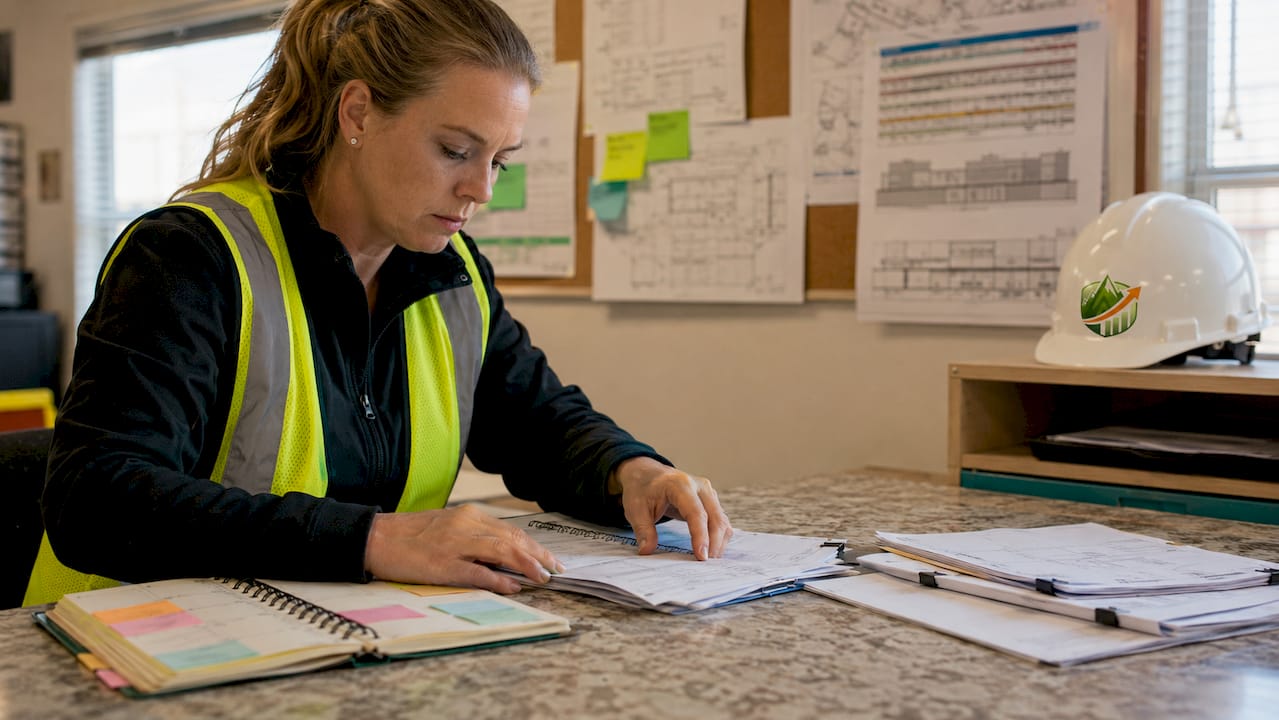
Effective punch list accountability depends on three documented components: notification, acknowledgment, and clear deadlines. The foreman owns all three on the sub's side. That means confirming receipt in writing, committing to a completion date for each item, and updating the GC when status changes. Verbal updates do not count. If it is not written down, it did not happen.
Pro Tip: Sort your punch list into a physical walk-path before you brief your crew. Start at the top floor and work down, or start at the far end of the building and work toward the exit. Your crew should never backtrack.
Key foreman duties during punch list closeout include:
- Acknowledging receipt of the punch list within 24 hours of delivery
- Filtering the full list to your trade's assigned items only
- Sequencing items by location to create an efficient walk-path
- Assigning specific items to specific crew members with deadlines
- Updating item status in real time and reporting completed work to the GC
- Documenting any items blocked by another trade or missing materials
How do foremen coordinate across trades to resolve overlapping items?
About 8–12% of punch list items involve overlapping scopes, meaning your trade cannot close an item until another trade finishes their part first. This is where most foremen lose time. A masonry foreman waiting on a plumber to rough in a sleeve before patching a wall is stuck in a dependency trap. If that dependency is not flagged immediately, the item sits open and the GC assumes your trade is slow.
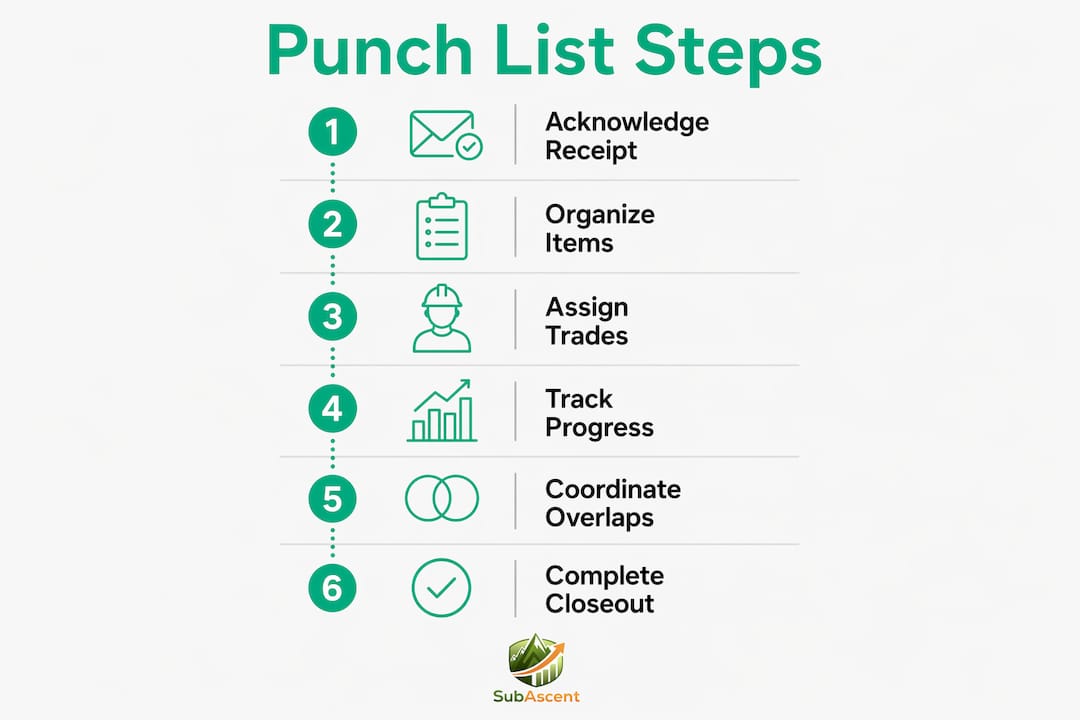
The fix is documentation and speed. Flag dependency constraints immediately rather than waiting for the weekly meeting. Call or message the superintendent the same day you identify the block. Put it in writing. That written record protects your trade from being blamed for a delay caused by another scope.
Coordination across trades during punch list closeout requires a clear sequence:
- Identify every item on your list that depends on another trade's completion
- Contact the responsible foreman directly to confirm their timeline
- Notify the GC superintendent in writing that the item is blocked and why
- Set a follow-up date to recheck the dependency and update the GC again
- Close the item in your tracking system the moment the dependency clears
Experienced foremen do not wait for weekly meetings to report these blocks. They contact the GC immediately, which keeps the project moving and keeps your trade off the problem list. Digital punch list tools make this faster by letting you assign multi-scope items with timestamped notes that all parties can see.
Pro Tip: When you flag a dependency, include the specific item number, the trade causing the block, and your estimated completion date once the block clears. One sentence with those three facts saves three phone calls later.
What best practices reduce surprises during the final walkthrough?
The pre-punch walk is the most underused tool in a foreman's closeout process. Pre-punch walks performed 2–3 weeks before the formal owner walkthrough give your trade time to find and fix deficiencies before the architect sees them. A masonry foreman who walks the job with a critical eye three weeks out will catch cracked grout joints, misaligned brick coursing, and incomplete caulk lines while there is still time to fix them without pressure.
Self-inspection is not optional under standard contract documents. AIA A201-2017 places the responsibility for preparing the initial punch list on the contractor, which means your trade should be generating its own deficiency list before anyone else does. Foremen who wait for the GC or architect to find problems are always playing catch-up.
The table below compares reactive versus proactive punch list approaches for specialty trade foremen:
| Approach | Timing | Outcome |
|---|---|---|
| Reactive: wait for GC list | After architect walkthrough | More items, less time, higher rework cost |
| Proactive: self-inspection | 3–4 weeks before walkthrough | Fewer surprises, faster closeout, stronger GC relationship |
| Pre-punch walk | 2–3 weeks before walkthrough | Early defect detection, controlled repair schedule |
| Location-based sequencing | Before crew deployment | Reduced travel time, faster item completion |
The foreman's role in project completion depends on catching problems early. A roofing foreman who walks the roof two weeks before the owner's inspection and fixes flashing gaps on their own schedule is in a completely different position than one who gets a punch list item on the day of closeout. The first foreman controls the timeline. The second one is reacting to it.
For the field RFI and submittal process, the same principle applies. Proactive documentation before the formal review cycle protects your trade and speeds up final payment.
How can foremen use digital tools to manage punch lists?
Digital punch list tools change the foreman's job from paper chasing to real-time tracking. Automated routing by deficiency category and location means the right items reach the right foreman without the superintendent making ten phone calls. That alone eliminates one of the biggest friction points in punch list closeout.
For specialty trades like fire protection, low-voltage, and glazing, where punch items are highly specific and often tied to inspection sign-offs, digital tracking creates a documented paper trail that protects the sub. Timestamped acknowledgments, photo uploads, and status updates all live in one place. When the GC asks why an item is still open, you have the answer in three taps.
The practical benefits of digital punch list management for foremen include:
- Timestamped acknowledgment records that prove your trade responded on time
- Photo documentation of completed work attached directly to each item
- Real-time status updates visible to the GC without a phone call
- Integration with crew hour tracking so punch list labor shows up in job costing
- Automated reminders for items approaching their deadline
- Filtered views that show only your trade's items from a full project list
The connection between punch list tracking and job costing matters more than most foremen realize. If your crew spends 40 hours on punch list rework and that labor is not captured, your job closes with a false profit number. Digital tools that tie punch list items to crew hours give the office the data they need to know whether the job actually made money.
For specialty trade subs who want to understand construction software built for subs, the key question is whether the tool was designed for a GC workflow or a sub's workflow. Most enterprise platforms assume you are the GC. A masonry or drywall foreman needs a tool that starts with your trade's scope, not the whole project.
Proper documentation practices, including as-built documentation for specialty systems, follow the same logic. Every verified item needs a record that survives the project closeout.
Key Takeaways
The foreman's effectiveness in punch list closeout determines whether a specialty trade sub gets paid on time or spends weeks chasing retainage.
| Point | Details |
|---|---|
| Acknowledge within 24 hours | Formal receipt acknowledgment within 24 hours prevents closeout delays and protects your trade's reputation. |
| Self-inspect before the GC does | AIA A201-2017 requires contractor self-inspection; foremen who walk the job 2–3 weeks early catch defects on their own schedule. |
| Flag dependency traps immediately | Document and report blocked items to the GC in writing the same day you identify the constraint. |
| Sequence by location | Sorting punch items by building, floor, and room reduces crew travel and speeds up completion. |
| Tie punch labor to job costing | Capturing punch list hours in your tracking system gives the office accurate budget-versus-actual data before the job closes. |
What I've learned from watching foremen lose the closeout
Most punch list failures I've seen are not skill problems. They are communication problems. The foreman knew the item was blocked. The foreman knew the crew was behind. But nobody told the GC until the superintendent showed up asking questions. By then, the damage was done.
The foremen who close out cleanly share one habit: they treat the punch list like a live document, not a to-do list they'll get to eventually. They acknowledge fast, sequence their work, and flag problems the same day they find them. They do not wait for permission to communicate.
The pre-punch walk is the single practice I would push every masonry, drywall, and roofing foreman to adopt. Walking your own work with a critical eye two to three weeks before the architect does is uncomfortable. You will find things you missed. That discomfort is the point. Finding it yourself means you control the fix. Waiting for the architect to find it means you are on their schedule, not yours.
Digital tools help, but they are not the solution by themselves. A foreman who does not communicate will not communicate better just because they have an app. The tool has to support a process that already exists. If your process is solid, digital tracking makes it faster and gives the office the data they need to run the business.
— Dave
How Subascent helps foremen close out faster
Subascent builds job and bid management software specifically for specialty trade subs, not for GCs. The Subascent platform gives foremen a field-ready way to track punch list items, log crew hours, and keep the office updated without a phone call for every status change.
For masonry, drywall, roofing, and other specialty trades, Subascent connects field documentation to job costing so the office knows whether punch list rework is eating the margin before the job closes. Foremen get filtered views of their trade's items. The office gets real-time labor data. If you want to see how it works for your trade, visit Subascent for specialty trades and explore the tools built for subs who run their own scope.
FAQ
What is the foreman's role in a punch list?
The foreman acknowledges receipt, organizes items by trade and location, assigns work to crew members, and reports status to the GC. Under AIA A201-2017, the contractor is responsible for self-inspecting and preparing the initial punch list.
How quickly should a foreman acknowledge a punch list?
Foremen should formally acknowledge receipt of a punch list within 24 hours. Delayed acknowledgment signals disorganization to the GC and risks pushing your trade to the back of the closeout schedule.
What is a pre-punch walk and why does it matter?
A pre-punch walk is a self-inspection performed 2–3 weeks before the formal owner walkthrough. It lets the foreman find and fix deficiencies early, reducing the number of items that appear on the architect's official list.
How do foremen handle punch list items that involve multiple trades?
Foremen identify dependency blocks, notify the GC superintendent in writing the same day, and set a follow-up date. About 8–12% of punch items involve overlapping scopes, making written documentation of delays critical to protecting your trade.
How does digital punch list tracking help specialty trade foremen?
Digital tools provide timestamped acknowledgments, photo documentation, and real-time status updates without requiring phone calls. They also connect punch list labor to job costing, giving the office accurate budget-versus-actual data before the job closes.