
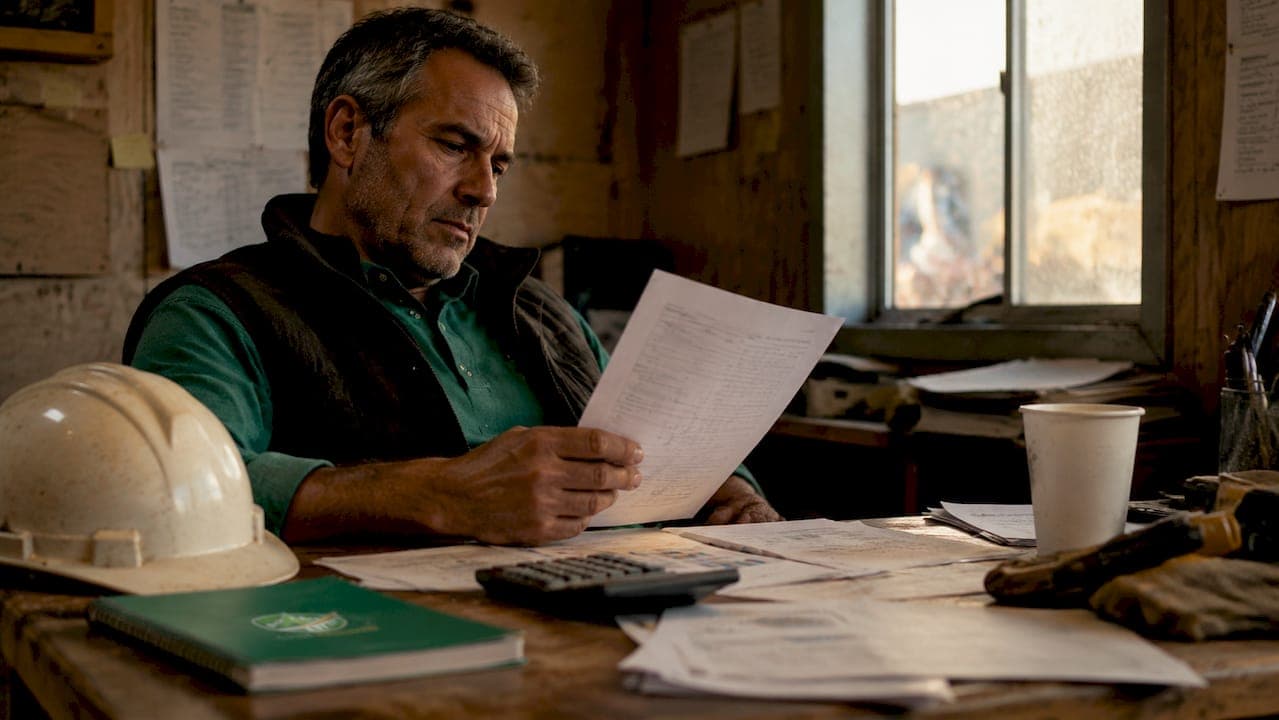
Subcontractor owner cash flow warning signs are specific financial and operational indicators that reveal liquidity problems before they become business-ending crises. Nearly half of all subcontractors operate without sufficient working capital, facing average payment delays of 56 days. That gap is not a minor inconvenience. For electrical, plumbing, HVAC, and roofing businesses running on thin margins, a 56-day payment lag can wipe out a payroll cycle before the owner even sees it coming. The good news is that most of these warning signs appear weeks before a real crisis hits.
1. Struggling to pay crews and suppliers on time
Missing payroll or stretching supplier payments is the most visible subcontractor financial red flag. When a framing or drywall crew starts asking about check timing, the business is already in trouble. Payroll is a fixed, non-negotiable obligation. If cash is not there to cover it, the underlying cause is almost always a timing gap between money going out on the job and money coming in from the GC.
This warning sign often appears first with material suppliers. A concrete or masonry sub that suddenly requests extended terms from a supplier it has paid on time for years is signaling a working capital shortage. Suppliers notice this before banks do.

2. Accounts receivable climbing past healthy limits
Accounts receivable that grow faster than revenue is a textbook cash flow issue for contractors. A healthy AR balance should stay proportional to your monthly billings. When DSO (Days Sales Outstanding) creeps up, it means you are funding the project out of your own pocket longer than planned.
AR automation covering more than 50% of operations reduces DSO by 32%, cutting about 19 days off the average collection cycle. Invoices sent within 48 hours of job completion get paid 2–3 times faster than those sent later. If your invoicing process takes a week or more after work is complete, that delay is a direct cash drain.
Pro Tip: Set a firm rule: invoices go out within 24 hours of milestone completion. Assign one person in the office to own this, whether that is the PM, the admin, or you.
3. Over-relying on credit lines for routine expenses
A line of credit is a bridge for timing gaps, not a substitute for operating cash. When a roofing or insulation sub uses its credit line every month to cover fuel, materials, or subcontracted labor, that is a warning sign of subcontractor failure in progress. The line was designed for peaks, not baseline operations.
The danger compounds quickly. Interest charges eat into already thin margins. When a real cash emergency hits, the line is already drawn down and unavailable. Businesses that reach this point often cannot recover without restructuring.
4. Repeated requests for early payment or unapproved change orders
A sub that constantly asks the GC for early payment releases is broadcasting a cash shortage. GCs notice this pattern. It damages the relationship and can affect future bid invitations. The same applies to change orders submitted before the GC has approved the scope change.
Subcontractors are structurally last in the payment chain, and delays compound rapidly at each level. Repeated early payment requests signal that the sub has no buffer to absorb normal payment timing. That is a structural problem, not a one-time cash hiccup.
5. Over-billing or manipulating WIP reports
Work-in-progress (WIP) reports are one of the most reliable early warning tools in contractor cash flow management. Chronic over-billing on WIP reports is a red flag signaling desperate cash fixes rather than billing efficiency. A sub that consistently bills ahead of actual completion is borrowing against future work to cover today's shortfall.
This pattern is common in glazing, fire protection, and low-voltage trades where billing schedules can be loosely tied to milestones. Over time, it creates a billing deficit that becomes impossible to close without a cash injection or project default.
Pro Tip: Review your WIP schedule monthly. If your overbilled position keeps growing, you are not ahead of the job. You are behind on cash.
6. Shrinking gross margins and eroding working capital
Gross margin compression is one of the quietest warning signs of subcontractor failure. When a painting or flooring sub wins jobs at lower margins to keep crews busy, the business is trading short-term volume for long-term solvency risk. Lower margins mean less cash generated per dollar of revenue.
Debt-to-equity ratios above 4.0 and bids significantly below the next competitor both indicate cash problems. Maintaining 30–45 days of working capital coverage is the industry benchmark for financial stability. If your working capital coverage drops below that range, the business has no cushion for a slow payment month.
7. Underestimating cash needs on large projects
Most subcontractors underestimate cash flow needs by 3–5 times when scaling to larger projects. A steel or rebar sub moving from $7,000 jobs to $1.9 million jobs faces peak cash gaps of up to $300,000 before the first payment arrives. That gap has to come from somewhere. If it comes from the credit line or delayed supplier payments, the warning signs above will appear quickly.
Walking away from projects with unmanageable cash gaps is often more profitable than accepting them and suffering a liquidity crisis. This is a discipline most trade owners learn the hard way.
How payment structures amplify cash flow risks for subs
The payment chain in construction runs from the owner to the GC to the sub. Each layer adds delay. By the time payment reaches a plumbing or HVAC sub, the original invoice may be 60 or more days old. Subcontractors unknowingly finance projects for owners due to these delays, explaining common cash shortages despite apparent project progress.
"Pay-when-paid" clauses make this worse. Under these clauses, the GC is not obligated to pay the sub until the owner pays the GC. That means a dispute between the owner and GC can freeze a sub's payment entirely, even when the sub's work is complete and accepted.
The "pay-when-paid" clause can be negotiated. Subs can push for personal guarantees from GCs, payment caps tied to specific milestones, or conversion to "pay-if-paid" language with defined timelines. Most subs never ask. The ones who do protect their cash position significantly.
Retainage compounds the problem further. A 10% retainage held across a $500,000 contract means $50,000 of earned revenue is locked up until final acceptance. For a small electrical or low-voltage sub, that is often more than one month of operating cash. Mobilization costs hit before the first draw, and retainage release can lag months after project closeout.
Cash flow is ultimately a production and operations issue, not just a finance problem. The timing of when crews mobilize, when materials are ordered, and when invoices are submitted all directly determine when cash arrives. A sub that manages its field operations tightly controls its cash position far better than one that treats billing as an afterthought.
Financial metrics that detect cash problems early
A 13-week rolling cash flow forecast updated weekly is the single most effective tool to prevent cash crises. It forces you to look 90 days ahead at actual cash in and cash out, not just revenue on paper. Most subs that run into trouble do so because they were managing by bank balance, not by forecast.
| Metric | Healthy range | Warning threshold |
|---|---|---|
| Days Sales Outstanding (DSO) | Under 45 days | Over 60 days |
| Working capital coverage | 30–45 days | Under 20 days |
| Debt-to-equity ratio | Under 2.0 | Above 4.0 |
| AR as % of monthly revenue | Under 15% | Over 25% |
Cash flow challenges worsen with revenue growth when timing and discipline gaps persist. A small timing gap that is manageable at $800,000 in annual revenue becomes a crisis at $3 million. Weekly forecast updates catch this drift before it becomes a default.
Three practices make the biggest difference in early detection:
- Pull your DSO number every two weeks. If it is trending up, find out which GCs are slow-paying and address it directly.
- Reconcile your WIP report monthly against actual billings and costs. Gaps between the two reveal over-billing or under-billing before they become structural.
- Track your credit line utilization as a percentage. If you are consistently above 60% drawn, the line is functioning as operating capital, not a bridge.
Pro Tip: Use a financial dashboard that shows DSO, AR aging, and working capital in one view. Reviewing these three numbers weekly takes less than 15 minutes and catches most problems before they compound.
Operational behaviors that signal cash distress before the numbers do
Cash flow issues manifest as production problems weeks before financial reports confirm trouble. Owners and GCs can often see the signs on the job site before any bank statement reflects the problem.
Watch for these operational red flags:
- Crew size reductions without a scope change. A masonry or concrete sub that suddenly shows up with half the crew it committed to is often managing a payroll cash shortage.
- Cutting corners on quality or safety. When a sub skips required inspections or uses lower-grade materials than specified, cost pressure is almost always the driver.
- Supplier relationship deterioration. A roofing or insulation sub that loses a supplier's credit account or starts paying COD has burned through its trade credit. That is a serious sign.
- Increased disputes with the GC. A sub that starts disputing every change order or delay claim is often trying to generate cash through claims rather than through production.
- Irregular scheduling and crew turnover. When experienced crew members leave and are replaced with day labor, the sub is managing cash week to week rather than by project plan.
These signs are visible to anyone paying attention. If you are a sub owner and you see these patterns in your own operation, the financial data will confirm the problem within 30–60 days. Do not wait for the bank statement.
Key takeaways
Subcontractor cash flow problems are predictable and preventable when you know the specific financial and operational warning signs to watch for.
| Point | Details |
|---|---|
| Payment delays are structural | Subs average 56-day payment delays, making working capital reserves non-negotiable. |
| WIP reports reveal hidden stress | Chronic over-billing on WIP is a cash crisis signal, not a billing win. |
| Forecast 13 weeks out, weekly | A rolling 90-day cash forecast updated weekly is the top defense against surprise shortfalls. |
| Operational signs appear first | Crew cuts, supplier disputes, and quality shortcuts show up before financial reports confirm trouble. |
| Large jobs carry hidden cash gaps | Scaling to bigger projects can create peak cash gaps of up to $300,000 before first payment arrives. |
What I have learned watching subs ignore the early signs
The warning signs in this article are not theoretical. They show up in real businesses every week, and the pattern is almost always the same. The owner sees the signs, tells himself it is temporary, and keeps bidding new work to generate cash. That is the trap.
New work does not fix a timing problem. It amplifies it. Every new job requires mobilization cash before the first draw. If the existing jobs are already cash-negative, adding volume makes the gap wider, not smaller. I have seen HVAC and framing subs with $4 million in backlog and no cash to make payroll on friday because every dollar was tied up in receivables and retainage.
The subs that survive this pattern are the ones who treat their 13-week forecast like a job site safety plan. They update it every week. They know their DSO number. They understand how crews get paid and plan around it. They also know when to say no to a job that would stretch their cash position past the breaking point.
The hardest discipline in this business is walking away from revenue. But a $1.9 million job with a $300,000 peak cash gap and a GC that pays in 75 days is not a win. It is a liability. The subs who understand that math are the ones still in business five years later.
— Dave
Take control of your cash position with Subascent
Cash flow problems do not announce themselves. They build quietly through slow invoicing, unchecked DSO, and jobs that consume more cash than they generate. Subascent is built specifically for specialty trade owners who need to see their financial position clearly, without digging through spreadsheets or waiting for the accountant's monthly report.
Subascent gives electrical, plumbing, HVAC, roofing, and other trade subs a clear view of job profitability, AR aging, and working capital in one place. If you are serious about catching cash flow issues before they become crises, start with the tools built for how your business actually works.
FAQ
What are the earliest subcontractor cash flow warning signs?
The earliest signs are operational, not financial. Crew size reductions, supplier credit losses, and irregular scheduling appear weeks before bank statements or financial reports confirm a problem.
How does DSO affect a subcontractor's cash flow?
DSO measures how long it takes to collect payment after invoicing. A DSO above 60 days means the business is funding the project for over two months before receiving payment, which drains working capital rapidly.
What is a healthy working capital level for a subcontractor?
Industry benchmarks place healthy working capital coverage at 30–45 days of operating expenses. Dropping below 20 days leaves no buffer for slow payment months or unexpected costs.
Why do WIP reports matter for cash flow management?
WIP reports expose billing patterns that signal financial stress. Chronic over-billing indicates a sub is pulling future revenue forward to cover current cash shortages, which is a structural warning sign.
Can a subcontractor negotiate "pay-when-paid" clauses?
Yes. Subs can negotiate personal guarantees from GCs, milestone-tied payment timelines, or defined payment caps to limit exposure under "pay-when-paid" contract language.