
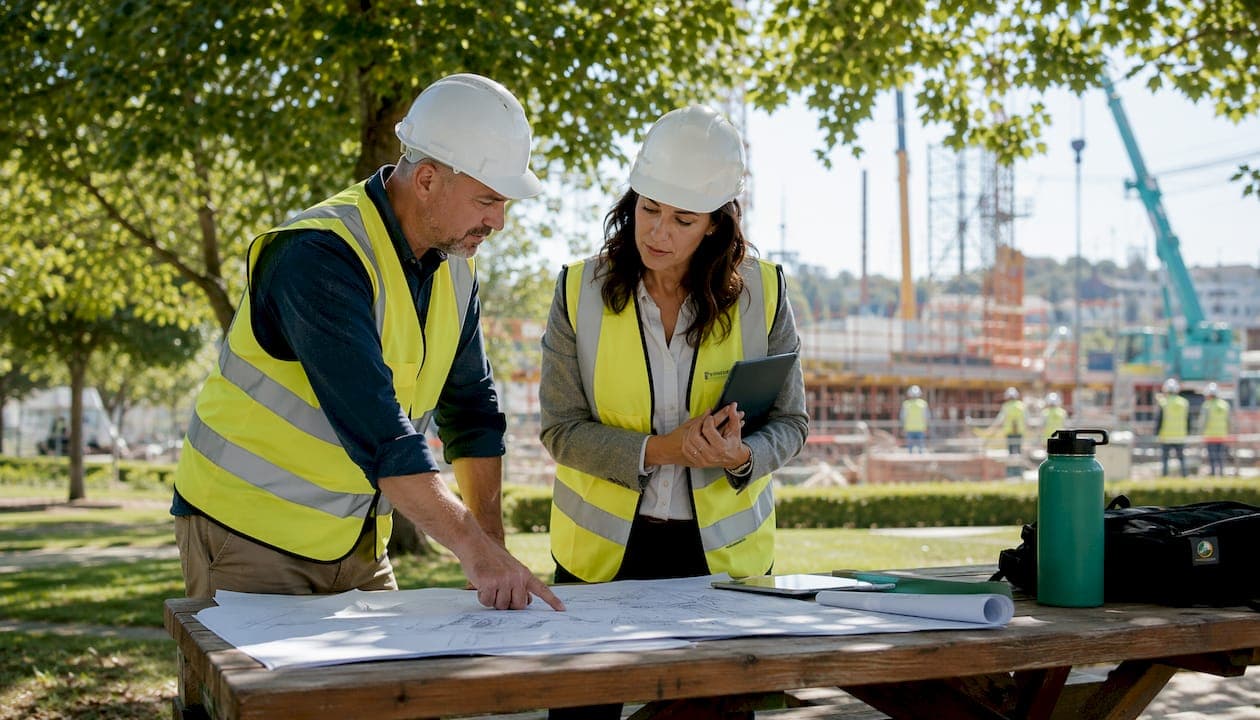
What are the core ways foremen communicate with project managers?
Foremen and PMs stay aligned through a mix of face-to-face conversations, daily production reports, and digital platforms that connect the field to the office in real time. Each channel serves a different purpose, and the best foremen use all of them deliberately.
- Face-to-face conversations remain the fastest way to resolve a real-time issue on site. When a plumbing foreman hits an unexpected pipe conflict, a two-minute conversation with the PM beats a three-hour email thread.
- Daily production reports create a written record of progress, labor hours, and open issues. A concrete foreman who documents a pour delay with photos gives the PM something to act on and something to show the GC.
- Digital messaging platforms like Logkeeper and RedeApp centralize updates, photos, and task assignments so nothing gets buried in a group text. Logkeeper supports voice, video, and chat with built-in translation, which matters on crews where English is a second language for many team members.
- Informal site conversations carry more accurate project intelligence than formal logs. A foreman who mentions in passing that a material delivery looks shaky has just handed the PM a week of advance warning.
- Translation tools close the gap on multilingual crews. RedeApp offers offline message queuing with read receipts, so a PM knows who got the update even when cell signal drops.
- Communication frequency standards vary by trade and project phase, but daily touchpoints during active work are the baseline most experienced PMs expect.
How do you build a communication routine that actually sticks?
Consistency is what separates foremen who keep PMs informed from those who create surprises. Regular site walks are not just inspections. They are structured opportunities for foremen to surface small problems before those problems become change orders.
- Daily scope reviews at the start of each shift help electrical, HVAC, and framing crews align on the day's work before anyone picks up a tool. Short daily reviews keep everyone on the same page and allow adjustments before work starts, not after.
- Fixed communication windows reduce the back-and-forth. A roofing foreman who calls the PM at 7:00 AM and again at 3:00 PM trains the PM to expect updates, which means fewer interruptions mid-shift.
- Soft skills training gives foremen the language to push back on unrealistic office demands without burning bridges. Lack of soft skills training limits a foreman's ability to communicate upward effectively, which leads to crew burnout and scope creep.
- Cultural and language awareness shapes how routines get built. On a masonry crew where Spanish is the dominant language, a bilingual daily briefing is not optional.
- Structured check-ins after change orders give both sides a chance to assess what worked and what did not, building a feedback loop that improves the next one.
Pro Tip: Capture informal site conversations the same day they happen. A quick voice note or text to yourself after a walkthrough conversation prevents a critical detail from disappearing before the end-of-day report.
How does a communication matrix help foremen and PMs manage information flow?
A communication matrix matches the right information to the right person at the right frequency. A drywall foreman needs daily operational updates. A project sponsor needs a weekly summary. Treating them the same creates either information overload or dangerous gaps.
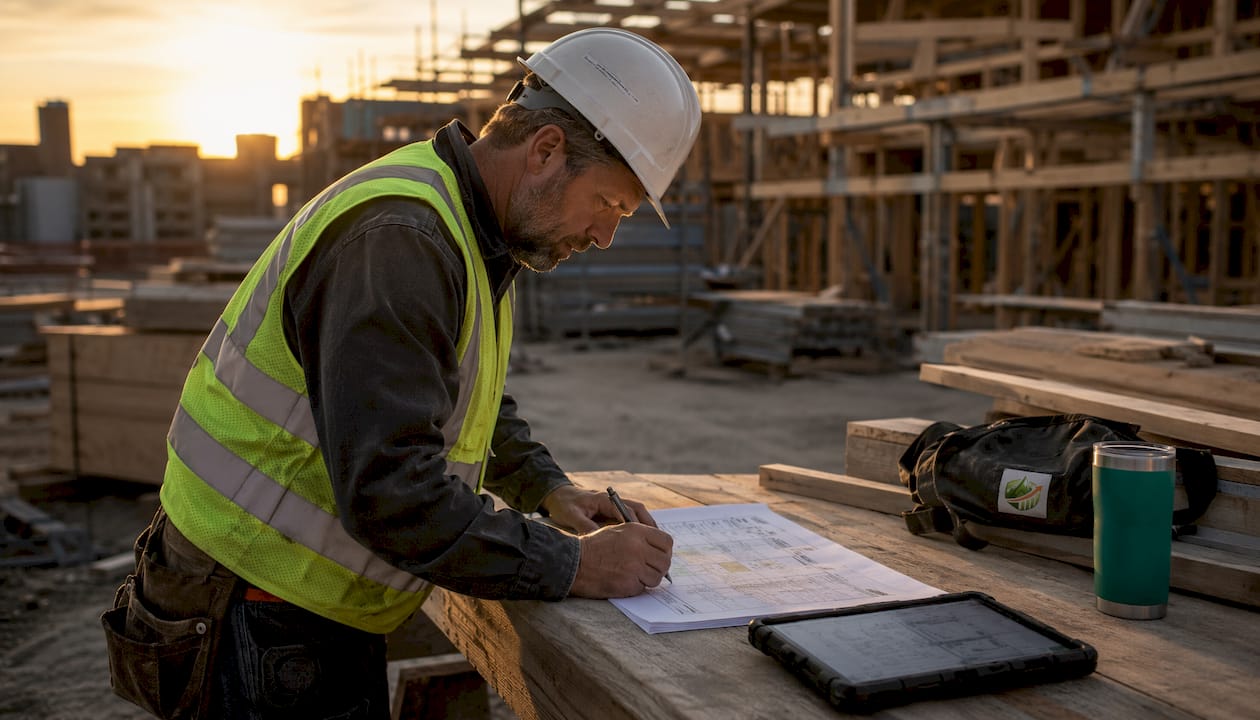
The matrix assigns ownership to each communication stream. When a design change needs to reach three specialty trade subs, someone specific owns that notification, with a defined method and a defined timeline. Ambiguity about ownership is functionally the same as no one being responsible.
| Communication type | Recipient | Frequency | Format |
|---|---|---|---|
| Daily progress update | PM, office admin | Daily | Written report + photos |
| Safety alert | Foreman, crew leads | Immediate/event-driven | Push notification, direct call |
| Schedule change | Foreman, PM | As needed | Digital message + verbal confirm |
| Change order status | PM, owner | Weekly | Email summary or platform update |
| Emergency site event | PM, safety lead | Immediate | Direct call, then written follow-up |
- Role-based messaging groups in platforms like Logkeeper or RedeApp let PMs push safety alerts to foremen only, without flooding the whole crew with office-level detail.
- Read receipts confirm delivery. On a fire protection or low-voltage job where a missed update can create a safety issue, knowing who read the message matters.
- Event-driven communications sit outside the regular schedule. A glazing foreman who spots a structural conflict needs an immediate escalation path, not a slot in next week's progress meeting.
The matrix reduces noise. A foreman who gets only the information relevant to their scope makes faster decisions and asks fewer clarifying questions mid-shift.
Best practices for resolving issues and protecting job profitability
Poor communication is the primary reason construction projects fail a third of the time. On specialty trade jobs, where margins are thin and rework is expensive, the cost of a missed message shows up fast in the budget vs. actual column.
- Immediate escalation channels for unexpected site events prevent small problems from compounding. A steel/rebar foreman who waits until end-of-day to report a concrete placement conflict has already cost the project time.
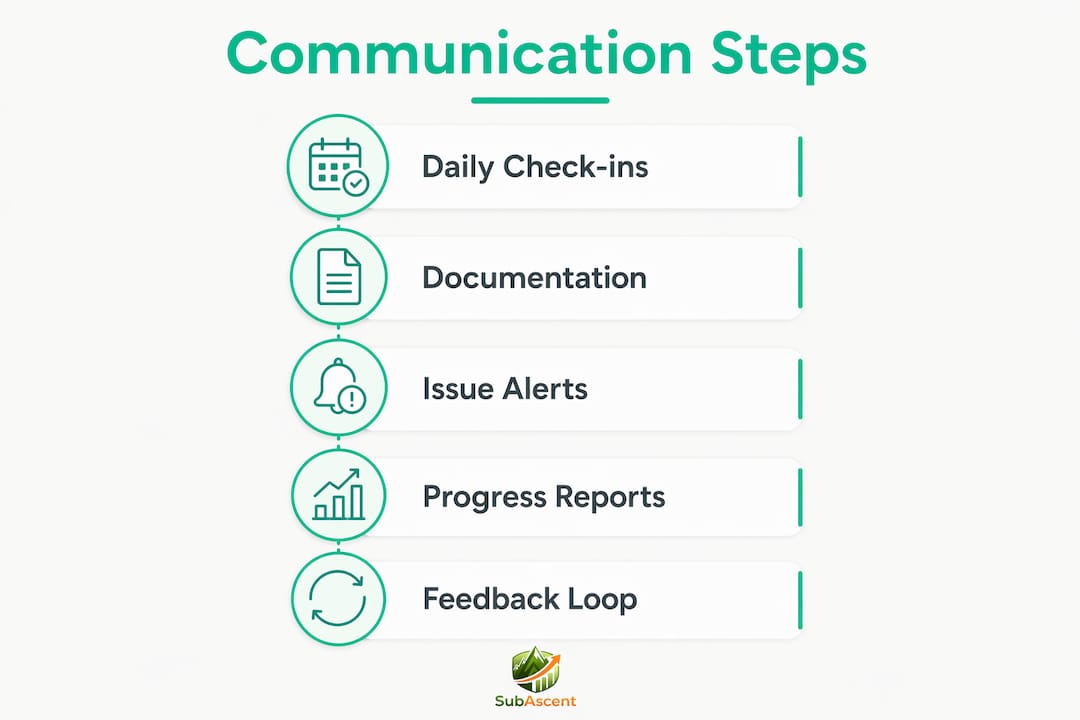
- Photo documentation and written notes taken daily create a source of truth for the whole team. Daily photo documentation illustrates progress and reinforces the case for contractor-initiated changes, which matters when a GC pushes back on a change order.
- Feedback loops close the gap between sending a message and confirming it was understood. A PM who sends a revised scope to a framing foreman and never confirms receipt is assuming, not communicating.
- Language barrier management goes beyond translation apps. Pairing a bilingual crew lead with a foreman on a mixed-language insulation crew is a structural fix, not a workaround.
- Communication audits catch gaps before they become disputes. Reviewing meeting frequency and documentation accuracy on a monthly basis keeps the process honest.
- Digital platforms that integrate messaging, documentation, and alerts reduce the chance that a critical update lives only in someone's text thread. The RFI workflow is one of the most common places where communication breaks down between foremen and PMs on specialty trade jobs.
- Foreman leadership training focused on assertive upward communication helps foremen advocate for resource needs and realistic schedules. That skill protects the crew and the job's profitability at the same time.
- Safety meeting software that structures site walk communication gives foremen and PMs a consistent format for capturing and escalating field observations before they become incidents.
Pro Tip: Adopt a "change radar" mindset on every site walk. The moment a painting or flooring foreman spots a condition that might require a change order, that observation goes to the PM the same day. The faster a necessary change gets identified, the less work gets wasted fulfilling the old plan.
Key Takeaways
Effective foreman-to-PM communication relies on combining direct daily contact, structured documentation, and digital tools that match the right information to the right person at the right time.
| Point | Details |
|---|---|
| Use multiple channels | Face-to-face, daily reports, and digital platforms each serve a distinct role in keeping PMs informed. |
| Build fixed routines | Daily scope reviews and set check-in windows reduce surprises and train PMs to expect updates. |
| Apply a communication matrix | Match information type, frequency, and format to each role to cut noise and close information gaps. |
| Document everything daily | Photo evidence and written notes create a source of truth that supports change orders and accountability. |
| Train foremen to communicate up | Soft skills training helps foremen push back on unrealistic demands and protect crew and job profitability. |
Subascent helps specialty trade subs run tighter jobs
Foremen and PMs on electrical, plumbing, HVAC, masonry, and other specialty trade jobs need tools built for how subs actually work, not tools designed for GCs. Subascent gives your team a single place to manage bids, track jobs, and keep field-to-office communication from falling through the cracks. See how Subascent works for specialty trade subcontractors across the US.