
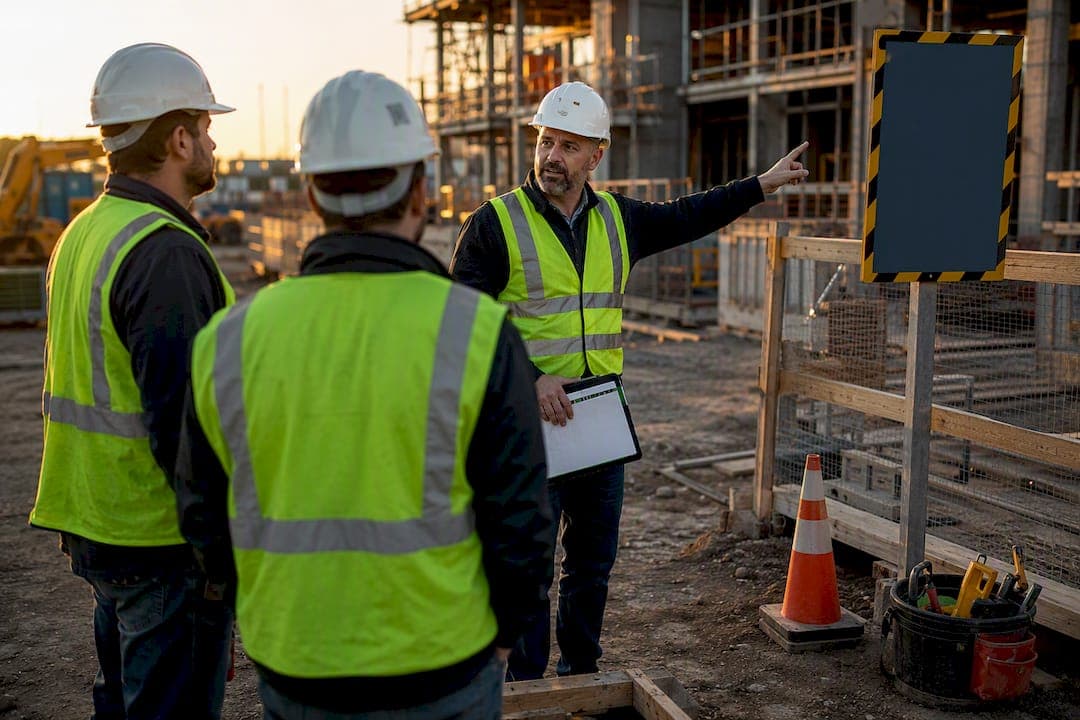
A toolbox talk is a short, informal safety meeting held on the jobsite before work starts, usually focused on a single hazard tied to that day's task. Most run for a short time, right at the start of a shift or before a high-risk activity begins. The goal isn't paperwork. It's making sure the crew clocks the specific danger in front of them today, gets a quick control plan, and has a chance to speak up before someone gets hurt.
- Short and informal, not a classroom lecture
- One topic, tied to today's work
- Short duration, pre-shift or pre-task
- Built for two-way talk, not a one-way announcement
Key Takeaways
A toolbox talk works when it stays short, covers one hazard tied to today's task, and ends with a named action item and a due date.
| Point | Details |
|---|---|
| Keep it short | Aim for 5 to 15 minutes, held pre-shift or before a high-risk task begins. |
| Make it two-way | Ask questions and take hazard reports instead of lecturing the crew. |
| Match the topic to the day | Pick fall protection, lockout/tagout, or PPE based on what's actually happening today. |
| Record and follow up | Note date, topic, attendees, and action items with an owner and deadline. |
| Use a tool for continuity | Subascent lets foremen log talks and assign follow-up so records survive shift changes. |
Table of Contents
- Why Toolbox Talks Matter Beyond Checking a Box
- Who Should Run a Toolbox Talk, and How Often?
- How to Run a Toolbox Talk Step by Step
- Toolbox Talk Topics and Scripts for Specialty Trades
- What Makes a Toolbox Talk Actually Work
- Documenting Toolbox Talks Without Slowing Down the Crew
- Mistakes That Kill Toolbox Talk Buy-In
- Real Toolbox Talks From the Field
- Why Small Crews Can't Skip This Step
- Keep a Record Without the Extra Paperwork
- Where to Find Official Toolbox Talk Guidance
- Frequently Asked Questions
- Sources
Why Toolbox Talks Matter Beyond Checking a Box
Toolbox talks aren't a substitute for your OSHA-required training program. They're a refresher, delivered at the exact moment a crew needs it. A drywall crew that attended a fall protection class earlier still needs a brief reminder before they set up scaffolding to reinforce the safety measures. That's the gap toolbox talks fill, and it's why the CCOHS frames them as supplements to formal training rather than a replacement for it.
A peer-reviewed scoping review of toolbox talk programs in construction found consistent gains in worker safety knowledge and attitudes when talks were run regularly. That's not a minor detail. Knowledge and attitude shifts are exactly what predict whether a worker actually stops and thinks before grabbing a ladder or skipping a lockout step.
Crews that run talks daily or weekly, rather than sporadically, tend to build a stronger safety culture over time:
- Keeps hazards top-of-mind instead of an afterthought
- Reinforces training crews already received
- Prompts immediate, task-specific hazard controls
- Opens a channel for workers to flag problems early
Who Should Run a Toolbox Talk, and How Often?
On most specialty trade crews, the foreman runs the talk. Sometimes it's a site supervisor or a competent worker designated for safety leadership, but it doesn't need to be a manager. What matters is that the person leading it actually knows today's task and its risks, which is one reason rotating leadership among experienced crew members works well on smaller teams.
Timing depends on the trade and the task, not a rigid calendar:
- Before every shift, for a quick baseline reminder
- Before a specific high-risk task (roof work, trenching, confined space entry)
- Right after a near-miss or incident, while it's fresh
- When conditions change, like a weather shift or new equipment on site
Keep it short. Daily works for high-risk trades like roofing or fire protection. Weekly can suffice for steadier, lower-variance work like flooring or painting.
How to Run a Toolbox Talk Step by Step
Running a toolbox talk well takes preparation, not charisma. Here's a runbook that works whether you're leading your first one or your five-hundredth.
- Pick one topic tied to today's work. Look at the day's task list or recent incident reports. A concrete crew pouring a slab near a public sidewalk needs a talk on traffic control, not a generic PPE reminder.
- State the objective in one sentence. Tell the crew exactly what you want them to walk away knowing. "By the end of this, you'll know where the lockout points are on that panel."
- Speak plainly and demonstrate when you can. Show the harness anchor point. Point at the actual hazard, not a photo of one.
- Ask the crew questions. Don't just talk at people. Ask what they've seen go wrong on similar tasks, and let silence sit until someone answers.
- Assign follow-up actions. If someone flags a broken guardrail or missing signage, name who's fixing it and by when.
- Close by confirming understanding. A quick "anyone unclear on anything before we start" catches gaps before they become incidents.
Pro Tip: Keep a running list of near-misses and use it as your topic source. A talk built on something that almost happened last week lands harder than one built on a generic safety calendar.
Toolbox Talk Topics and Scripts for Specialty Trades
The best toolbox talks are specific to the trade and the day, not generic. Here are starter topics and opening lines that work across specialty crews:
- Fall protection (roofing, framing, steel): "Before we go up, walk me through where your tie-off points are today."
- Lockout/tagout (electrical, HVAC/mechanical): "Who's verifying this panel is de-energized before anyone touches it?"
- PPE compliance (masonry, concrete, insulation): "What's cutting today, and what's the right respirator for that dust?"
- Ladder safety (painting, drywall, low-voltage): "Last week someone set up on uneven ground. What's our rule today?"
- Heat stress (roofing, concrete, exterior trades): "It's hitting 95 by noon. What are the warning signs we watch for in each other?"
- Confined spaces (plumbing, fire protection): "Before anyone enters that vault, who's on standby outside?"
Adapt the script to whatever's actually happening. A roofing foreman on a steep-slope tear-off needs a different opener than one doing a flat commercial roof.
What Makes a Toolbox Talk Actually Work
The scoping review mentioned earlier didn't just find that toolbox talks help. It identified what separates the ones that work from the ones that don't: regular scheduling, real worker engagement, supervisor training on how to lead a talk, and materials that fit the crew's actual language and reading level.
The same review flagged a limitation worth knowing. Long-term outcome data, meaning fewer injuries months or years later, is mixed and harder to isolate from other safety program changes. Short-term gains in knowledge and attitude are well supported. Lasting behavior change depends heavily on delivery quality.
A practical checklist for getting the delivery right:
- Run talks on a predictable schedule, not only after something goes wrong
- Make it a conversation, not a monologue
- Document what was discussed and what got fixed
- Train whoever leads talks on how to actually lead one, not just recite a sheet
Documenting Toolbox Talks Without Slowing Down the Crew
A useful record takes 30 seconds to fill out: date, topic, who attended, and any action items with a name and due date attached. That's it. This isn't about paperwork for its own sake. It's what lets you prove a hazard was addressed and gives the next shift's foreman context without having to ask around.
Storage can stay simple. A paper checklist clipped to a board works. So does a photo of handwritten notes, similar to how many crews already document delay events in the field. A mobile app just makes it searchable later.
Mistakes That Kill Toolbox Talk Buy-In
The fastest way to lose a crew is to lecture them for twenty minutes about something that has nothing to do with today's work. Running long, picking irrelevant topics, and never following up on flagged hazards are the three mistakes that turn toolbox talks into something crews tune out.
- Lecturing instead of asking questions
- Covering a topic disconnected from today's task
- Running past 15 minutes
- Never recording or closing out action items
- Ignoring language barriers on a mixed-language crew
Pro Tip: If a crew seems checked out, hand the talk to a different worker for a week. A peer running the talk often gets more honest engagement than a foreman running it every single day. Rotating leaders and pairing talks with a quick visual, like pointing at the actual hazard instead of describing it, tends to fix disengagement faster than adding more rules.
Real Toolbox Talks From the Field
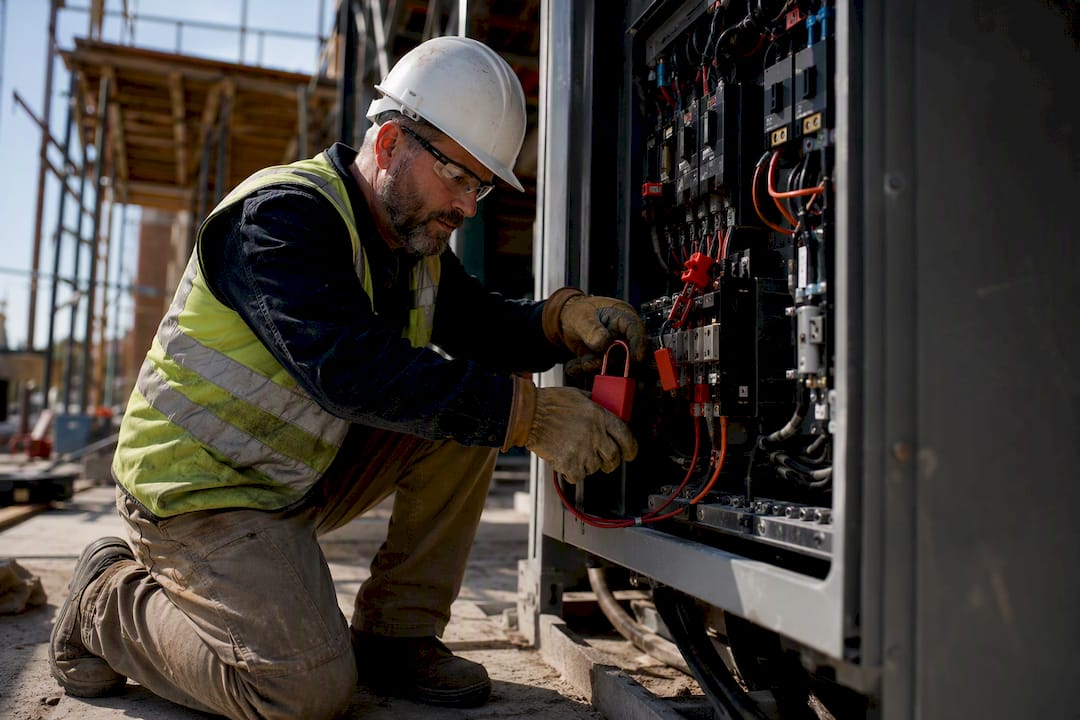
An electrical foreman running a lockout/tagout talk before a panel swap doesn't need a script. He points at the disconnect, asks a journeyman to walk through the verification steps out loud, and notes on his clipboard who confirmed zero energy. That single line in his notes covers him if anyone asks later.
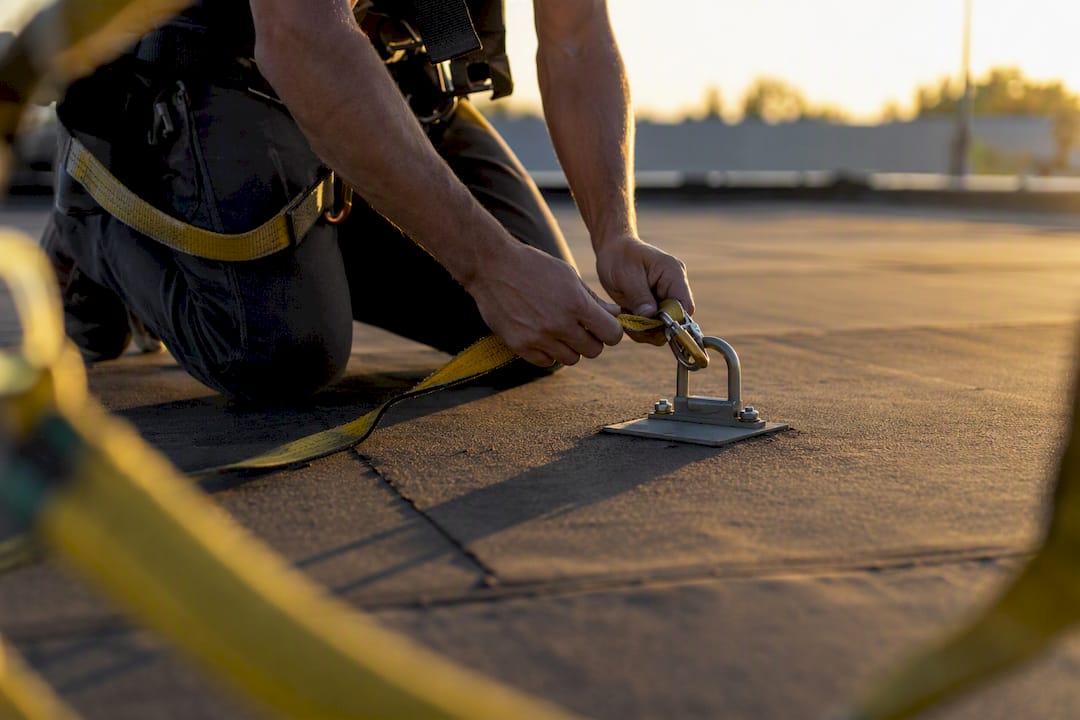
A roofing foreman before a steep-slope tear-off does something similar: names the anchor points, asks who's checking harnesses before anyone climbs, and assigns one crew member to inspect tie-offs mid-morning. Both examples follow the same shape: pick the hazard, ask instead of tell, assign a name to the follow-up, and write down what happened. That pattern travels across trades, from foreman job safety planning to daily field communication.
Why Small Crews Can't Skip This Step
Short toolbox talks scale down as easily as they scale up. A five-person electrical crew doesn't need a safety department to run one, just a foreman willing to spend five minutes before the ladder comes off the truck.
Keep a Record Without the Extra Paperwork
Running the talk is the easy part. Keeping track of what got discussed, who attended, and whether that broken guardrail actually got fixed is where most small crews fall behind, usually because it lives in someone's head or a stack of paper on a truck dash.
Subascent gives foremen and project managers at specialty trade subs a place to log toolbox talks, assign follow-up actions to a name and date, and pull up the history when a GC or safety audit asks for it. It's built for crews that don't have a dedicated safety coordinator but still need a clean record. If your team is juggling notes across paper checklists and phone photos, see how Subascent's field tools fit into a daily routine, then start a free trial to try it on your next job.
Where to Find Official Toolbox Talk Guidance
- OSHA: outlines employer training responsibilities that toolbox talks help reinforce.
- CCOHS: practical how-to guidance on running safety talks.
- Washington State L&I: printable, ready-to-use topic sheets.
- NIOSH/CDC toolbox talks kit: downloadable templates for jobsite use.
Frequently Asked Questions
How long should a toolbox talk last? Most run 5 to 15 minutes. Anything longer starts to feel like a lecture and crews tune out.
Who is responsible for leading a toolbox talk? Usually the foreman or site supervisor, though a competent worker can lead one too, especially when rotating leadership to keep the crew engaged.
Is a toolbox talk the same as formal safety training? No. It supplements formal training required under OSHA guidelines, but it doesn't replace certification courses or mandatory instruction.
How often should toolbox talks happen? Daily works well for high-risk trades like roofing or fire protection. Weekly can be enough for steadier trades like flooring or painting, with extra talks after incidents or condition changes.
What should be documented after a toolbox talk? At minimum, the date, topic, attendee names, and any action items with an owner and deadline attached.
Sources
- Toolbox Talks — L&I (Washington State)
- Safety talks — How to (CCOHS)
- Scoping review of toolbox talks: effectiveness and best practices (MDPI, 2025)
- Employer responsibilities — OSHA